
Onboarding a remote engineer well means getting access and security sorted on day one, assigning a buddy, shipping a small first deliverable within the first week, and setting clear 30/60/90-day goals so the new joiner knows what good looks like. Done properly, a remote engineer can be contributing meaningfully within days and fully productive inside the first month, even when the rest of the team is in a different time zone. This checklist gives you the structure to make that happen.
Remote onboarding fails quietly. Nobody sees the new starter struggling at their desk, so weak onboarding shows up later as slow ramp-up, repeated questions and frustration on both sides. A deliberate plan prevents all of that.
Why structured remote onboarding matters
The first few weeks set the trajectory for the entire engagement. A new remote engineer who ships something real in week one, knows exactly who to ask for help, and understands their goals will build momentum and confidence fast. One who spends a week chasing access and reading documentation with no clear first task often never fully recovers that lost momentum.
Structured onboarding pays back in three ways:
- Faster time to first contribution. A clear path to a first merged change turns abstract context into concrete confidence.
- Lower load on the team. A buddy and good docs mean questions get answered once, in the right place, rather than interrupting everyone repeatedly.
- Better retention. People who feel set up to succeed in their first month are far more likely to stay and thrive.
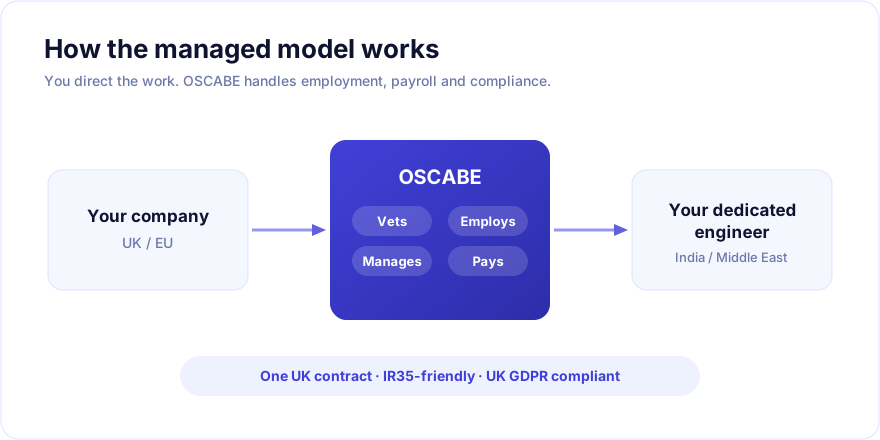
With a dedicated, fully-managed team, the employment, equipment and admin side of onboarding is handled for you, so you can focus entirely on the technical and cultural ramp. For the broader programme view, our guide to onboarding an offshore development team in 30 days complements this individual-level checklist.
Day one: access, security and a warm welcome
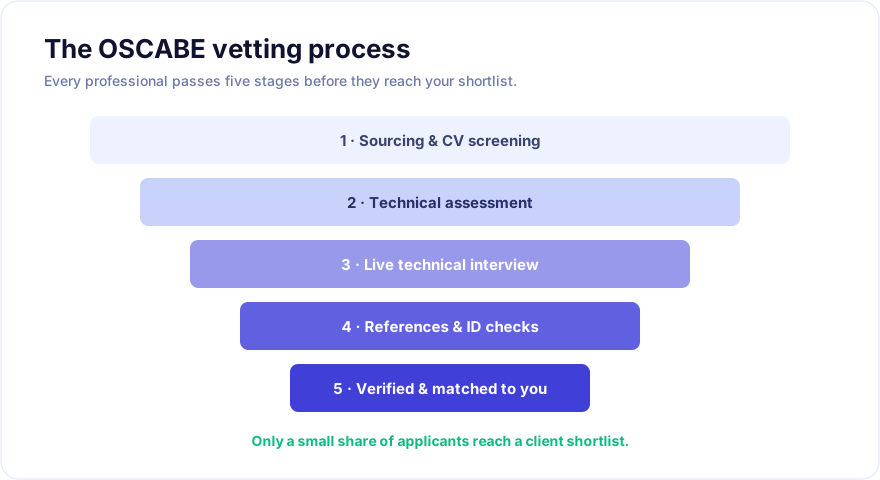
Day one is about removing friction and making the new engineer feel like part of the team immediately. Nothing kills early momentum like spending the first day blocked on accounts that should have been ready. Everything below should be prepared before they start, not scrambled together on the morning. It helps enormously that, with a managed team, the engineer arriving on day one has already passed a five-stage vetting process, so onboarding starts from proven capability rather than an unknown.
Your day-one checklist:
- Accounts and access. Email, chat, source control, issue tracker, CI/CD and cloud access provisioned ahead of time, scoped to what the role actually needs.
- Device and security baseline. A configured, encrypted device with the agreed security controls in place, plus multi-factor authentication and a password manager set up.
- Least-privilege access. Grant only what is needed to start, and add more as the role expands, rather than handing over broad access on day one.
- A written welcome. A short onboarding doc with the team, who does what, where things live, the working rhythm and the overlap hours.
- A human welcome. A live introduction during the overlap window so the new joiner meets the team as people, not just avatars.
The security side here is not bureaucracy; it is the foundation of trusting a remote engineer with your systems. Provisioning least-privilege access from the start, on a managed device, is exactly the discipline covered in our guide to securing remote engineering teams. Getting it right on day one is far easier than retrofitting it later.
The first week: a buddy and a first deliverable
The single most effective remote onboarding practice is pairing every new engineer with a buddy and giving them a small but real first deliverable to ship within the first week. The buddy provides a safe, low-friction route for the hundred small questions a newcomer has, and the first deliverable turns reading and setup into genuine confidence.
A strong first week includes:
- A named buddy. An experienced teammate, available in the overlap window, who is explicitly responsible for answering questions and checking in proactively.
- Environment running locally. The new engineer can build, run and test the codebase on their own machine, with the buddy on hand if setup snags.
- A first deliverable. A small, well-scoped task, a minor bug fix or a contained improvement, designed to be merged within the first week so they experience the full workflow end to end.
- A walk through the workflow. How branches, reviews, CI and deployment work in practice, ideally by doing it together on that first task.
That first merged change is psychologically huge. It proves the environment works, the new engineer can navigate the codebase, and they belong on the team. It also surfaces any gaps in your onboarding docs while they are still fresh, so you can fix them for the next joiner. Choose the first task carefully: small enough to finish quickly, real enough to matter.
A good buddy relationship in week one also starts the wider knowledge transfer that keeps your team resilient. Spreading context so no single person is a bottleneck is exactly the discipline covered in knowledge transfer and the bus factor on offshore teams, and onboarding is where it begins.
A 30/60/90-day plan for a remote engineer
Beyond the first week, a 30/60/90-day plan gives the new engineer a clear sense of what success looks like at each stage and gives you natural checkpoints to course-correct. The shape is simple: learn the system, then own a piece of it, then deliver independently.
| Phase | Focus | What good looks like by the end |
|---|---|---|
| First 30 days | Learn and contribute | Environment mastered, several small changes shipped, knows the team and rituals, comfortable in the codebase |
| 31 to 60 days | Own a workstream | Takes a feature or area end to end, contributes in reviews and planning, needs less hand-holding |
| 61 to 90 days | Deliver independently | Owns an area with confidence, helps others, gives input on technical direction, fully embedded |
Make the plan explicit and revisit it in regular one-to-ones. The goals should be about capability and contribution, not hours, since a remote engineer is judged on what they deliver. Adapt the pace to seniority: a senior may own a workstream within the first month, while someone earlier in their career may need the full ninety days to get there. The point is shared clarity on the destination. Schedule the check-ins inside your shared overlap window so they happen live; the practicalities of aligning those hours are covered in managing distributed teams across IST and GMT.
A short cadence to support the plan:
- Weekly one-to-ones in the first month, covering blockers, progress and how they are settling in.
- A 30-day check-in to confirm they are on track and address any gaps early.
- A 90-day review to agree they are fully ramped and set goals for the next quarter.
Frequently asked questions
How long does it take to onboard a remote engineer?
With a structured plan, a remote engineer typically ships a small first change within the first week and is meaningfully productive within the first month. Full ramp to independent ownership of an area usually lands around the 60 to 90-day mark, depending on seniority and the complexity of your systems. The biggest accelerator is having access, a buddy and a first task ready before they start.
What should be on a remote engineer onboarding checklist?
Pre-provisioned accounts and least-privilege access, a configured and secured device, a written welcome and team guide, a named buddy, a runnable local environment, a small first deliverable for week one, and a clear 30/60/90-day plan. Preparing the access and security elements before day one is what separates a smooth start from a frustrating one.
What is the role of a buddy in remote onboarding?
A buddy is an experienced teammate, available during the overlap window, who takes explicit responsibility for helping the new joiner settle in. They answer the steady stream of small questions, check in proactively rather than waiting to be asked, and provide a friendly first point of contact. A good buddy dramatically reduces ramp-up time and helps the newcomer feel they belong.
How do you onboard an engineer in a different time zone?
Lean on asynchronous materials, a clear written onboarding doc, recorded walkthroughs and a well-documented setup, and use your overlap window for the live introductions, pairing and questions that benefit from real-time conversation. A buddy who shares enough hours is essential. With a dedicated managed team that already overlaps your day, this is straightforward.
Onboard remote engineers who hit the ground running
A great remote engineer onboarding experience is not luck; it is a checklist executed well. Sort access and security before day one, assign a buddy, ship a small first deliverable in week one, and set clear 30/60/90-day goals. Do that and your new joiner builds momentum fast, even from another time zone.
If you want dedicated, fully-managed remote engineers who arrive vetted and ready to onboard into your team, contact OSCABE or browse the engineers we provide. You can also see how the managed model handles equipment, employment and compliance so you can focus on a great technical ramp.