
Building a strong remote engineering culture and retaining talent come down to four things that have nothing to do with ping-pong tables: a real sense of belonging, genuine growth and learning paths, recognition that is seen and felt across distance, and fair, transparent pay. When remote engineers feel they belong, are growing, are valued and are paid fairly, they stay, and a stable team is the single biggest driver of engineering productivity. This guide sets out how to build that culture deliberately on a distributed team.
Culture does not happen by accident on a remote team, and it certainly does not transmit through the office walls because there are none. It has to be designed into how the team works, communicates and recognises one another, or it quietly erodes.
Why culture and retention matter more on remote teams
Retention is not a soft metric; it is one of the highest-leverage things an engineering leader can influence. Every departure takes context with it, the deep knowledge of why systems are the way they are, and replacing it costs months of recruitment and ramp-up. On a distributed team this matters even more, because the written record and continuity of relationships are what hold everything together. Reducing how much critical knowledge sits with any one person is the defensive side of the same problem, which we cover in knowledge transfer and the bus factor on offshore teams.
The case for investing in remote culture is concrete:
- Context compounds. An engineer who has held a service for two years is worth several who cycle through it; retention protects that compounding value.
- Churn is expensive and slow. Recruitment, onboarding and lost context cost far more than the effort of keeping good people.
- Culture is your retention engine. People rarely leave roles where they feel they belong, are growing and are fairly rewarded.
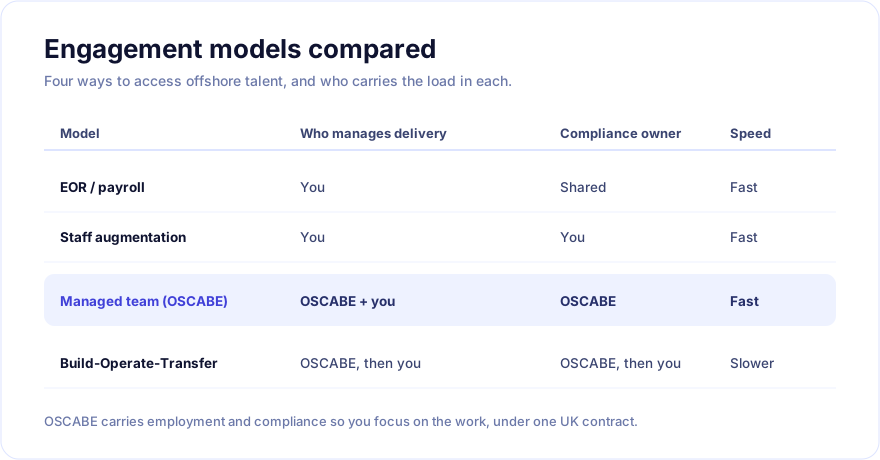
This is also where the engagement model matters. A rotating pool of marketplace contractors has no culture to retain; a dedicated, fully-managed team is built for continuity, which is what makes culture-building worthwhile. The link between the model and the productivity gains it unlocks is covered in scaling a startup engineering team with offshore pods.
How do you build belonging on a distributed team?
Belonging is the feeling that you are a real member of the team, not a remote resource bolted on. It is the foundation everything else sits on, and it is the thing most at risk when people never share a physical space. Building it remotely takes intention, but it is entirely achievable.
Practices that create belonging:
- Include remote engineers fully. They attend the same planning, retros and decisions as everyone else, with a real voice, not a passive seat. Decisions are not made in a room they cannot join.
- Invest in human connection. Time in your overlap window for non-work conversation, team rituals and simply getting to know each other as people.
- Write inclusively. A strong written culture lets quieter voices and non-native English speakers contribute on equal footing, and gives everyone the same shared context.
- One team, not us-and-them. Avoid language and structures that frame offshore engineers as a separate, lesser tier. They own real areas and are accountable like anyone else.
The fastest way to destroy belonging is to treat remote engineers as interchangeable ticket-takers. The fastest way to build it is to give them genuine ownership of an area and a real say in how the work is done. A good remote engineer onboarding checklist starts this from day one, because belonging established early tends to endure. Belonging also depends on engineers being genuinely present for the moments that matter, which is why a healthy overlap window, set out in managing distributed teams across IST and GMT, is so important.
Growth, learning and recognition across distance
The two things engineers most often cite for leaving are lack of growth and not feeling valued. Both are entirely within your control on a remote team, and both are easy to neglect when you cannot see people every day. Addressing them deliberately is what turns a job into a place people want to stay.
The table below contrasts what drives engineers away with what keeps them.
| Driver | What pushes engineers out | What keeps them |
|---|---|---|
| Growth | Stagnation, no path, repetitive work | Clear progression, new challenges, learning budget |
| Recognition | Invisible effort, credit lost across distance | Visible, specific, frequent acknowledgement |
| Belonging | Treated as an outsider or resource | Full inclusion, real ownership, a voice |
| Pay | Below-market or opaque pay | Fair, transparent, reviewed compensation |
| Management | Micromanagement or neglect | Trust, support and regular one-to-ones |
On growth, give every engineer a visible path and the means to progress: stretching work, ownership of meatier areas over time, support for learning, and honest conversations about where they want to go. None of this requires an office; it requires attention in one-to-ones and a manager who genuinely cares about each person's trajectory.
Recognition needs special care remotely, because good work that would be visible in an office can vanish into the gaps between time zones. Make recognition deliberate and public:
- Acknowledge specifically. Name what someone did and why it mattered, in a shared channel where the team sees it.
- Make it frequent. Small, regular recognition beats an annual award nobody remembers.
- Credit fairly across the team. Ensure remote engineers get the same visibility for their contributions as anyone else, never letting credit pool onshore.
When people can see that good work is noticed and growth is real, they invest in the team rather than browsing for the exit.
Fair pay and the model that supports retention
Culture cannot paper over unfair pay. Engineers talk to each other and know their worth, and nothing erodes goodwill faster than feeling underpaid or kept in the dark about how pay is set. Fair, transparent, regularly reviewed compensation is a precondition for retention, not an optional extra.
What fair pay looks like in practice:
- Benchmarked to the market. Pay that reflects the local market for the role and skill level, informed by public market data and industry surveys rather than guesswork.
- Transparent. People understand how pay is determined and how they can progress, so it feels fair rather than arbitrary.
- Reviewed regularly. Compensation keeps pace as people grow and as the market moves, rather than drifting until someone leaves to get a rise elsewhere.
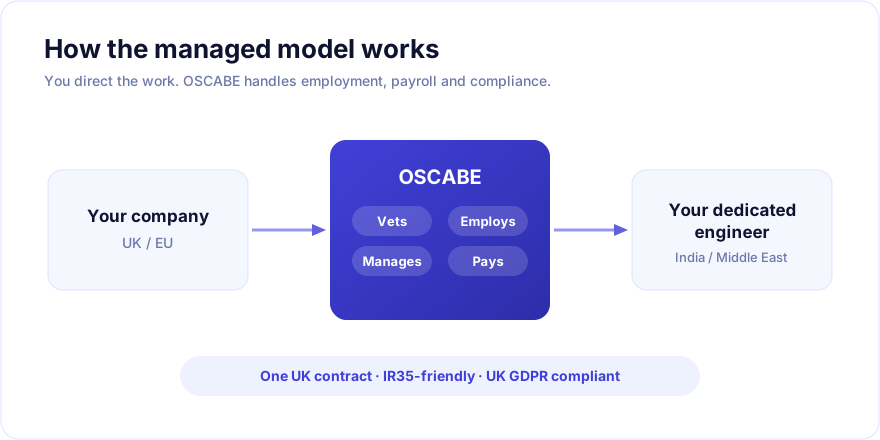
The engagement model has a large bearing on whether fair pay and stability are achievable. With a dedicated, fully-managed team, the people are employed and supported properly rather than treated as disposable gig workers, which is precisely what makes long-term retention possible. The provider handles competitive, compliant employment, so the engineers have the stability that lets them commit to your team for the long term. That continuity is the whole point: a team that stays together accumulates context, trust and shared standards that a churning roster never can.
This is the core advantage of the managed approach over staff augmentation or marketplace hiring. You are not just renting capacity; you are building a stable, well-treated team whose retention is actively managed for you. Over a couple of years, that difference compounds into a team that knows your systems deeply and ships with confidence.
Frequently asked questions
How do you retain remote engineers?
By giving them belonging, growth, recognition and fair pay. Include them fully in the team and its decisions, provide a clear path to progress with stretching work and learning support, recognise their contributions visibly and often, and pay fairly and transparently against the market. Engineers rarely leave roles where they feel they belong, are growing and are properly rewarded. A dedicated, well-managed engagement makes all of this sustainable.
How do you build culture on a remote engineering team?
Deliberately, since it will not form by osmosis. Build belonging through full inclusion and real ownership, invest in human connection during your overlap window, foster a strong written culture so everyone has a voice, and make recognition specific and public. Culture on a remote team is the sum of how you communicate, decide and acknowledge people, all of which you can design intentionally.
Why is retention so important for engineering teams?
Because engineers carry context that is expensive and slow to replace. When someone leaves, you lose their deep understanding of why systems are built the way they are, and you pay months of recruitment and ramp-up to recover. A stable team where context compounds is one of the strongest drivers of engineering productivity, which is why retention is a leadership priority, not an HR afterthought.
Do offshore engineers stay as long as local ones?
They can, and often longer, when they are employed properly, treated as full members of the team, given growth and recognition, and paid fairly. Churn on offshore teams usually comes from treating people as disposable contractors, not from location. A dedicated, fully-managed model that invests in people and actively manages retention produces the stability that makes long tenures normal.
Build a remote team that wants to stay
A strong remote engineering culture is not built from perks or mandated socials; it is built from belonging, growth, recognition and fair pay, applied consistently and deliberately. Get those right and retention follows, and with it the compounding context and trust that make a team genuinely productive.
If you want a dedicated, fully-managed remote engineering team that is employed properly, supported for the long term and built for retention under one UK contract, contact OSCABE or browse the engineers we provide. You can also explore managed teams and pods to see how the model turns a stable, well-treated team into a lasting advantage.