
Scaling a startup engineering team from 0 to 30 with offshore pods works best when you keep a strong onshore core for product direction and architecture, then add dedicated, fully-managed offshore pods to extend delivery capacity without the fixed cost and hiring lag of building everything in-house. The key decisions are when to add a pod, how to structure it, and how to keep cost and quality under control as you grow. OSCABE managed pods start from £7,500 per month under one UK contract.
This guide maps the journey from your first engineers to a 30-person organisation, shows when each pod should join, and covers the structure, cost control and pitfalls that decide whether offshore scaling succeeds.
When should a startup add an offshore pod?
The honest answer is: once your roadmap is bigger than your team can deliver and the bottleneck is execution capacity rather than product clarity. Adding people offshore before you know what to build just exports confusion. Adding them once you have a clear backlog and a stable core multiplies your output.
A practical sequence for most startups looks like this:
- 0 to ~6 engineers (onshore core). Founders and early hires own product, architecture and the critical path. Keep this in-house and co-located or tightly remote. Do not offshore the founding architecture decisions.
- ~6 to ~12 (first pod). When the backlog clearly exceeds capacity and you have at least one engineer who can own an area, add a first offshore pod to take a defined workstream end to end.
- ~12 to ~20 (second pod and specialism). Add a second pod and begin separating concerns, for example a platform or DevOps pod alongside a product pod. This is where hiring remote DevOps engineers for a UK startup often pays off.
- ~20 to 30 (scale and structure). Multiple pods aligned to product areas, each with clear ownership, supported by a lightweight engineering management layer.
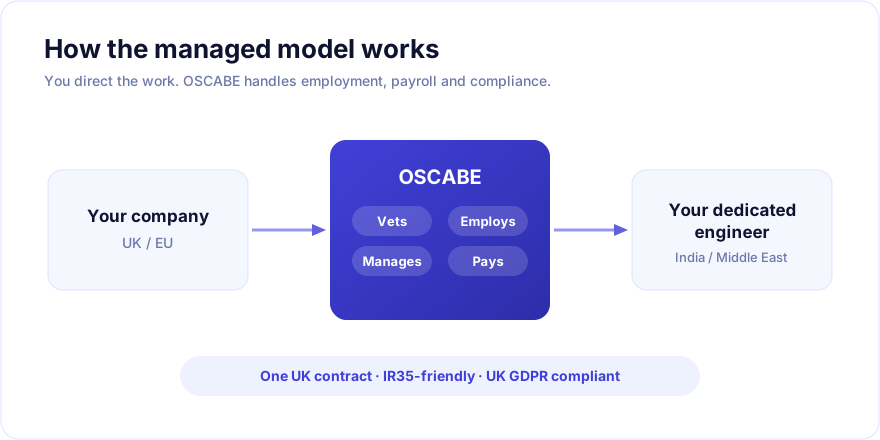
The trigger to add a pod is rarely a headcount target. It is a sustained gap between what you have committed to ship and what your current team can realistically deliver, plus the existence of someone who can give the pod direction.
How should you structure offshore pods?
A pod is a small, dedicated, cross-functional team that owns an area, not a pool of individuals you assign tickets to. Structuring it well is the difference between a force multiplier and a coordination tax.
The patterns that work:
- Own an area, not a task. Give each pod a product surface, service or domain it is accountable for, so context compounds instead of resetting every sprint.
- Mirror your rituals. Shared standups, sprint planning and retros that overlap with your working day keep the pod inside your process rather than alongside it. The 4 to 6 hours of daily overlap OSCABE provides makes this practical.
- One point of accountability. Each pod should have a lead who owns delivery and is your single contact for that area.
- Keep architecture onshore early. Until your platform is stable, keep the big architectural calls with your core team and let pods own implementation within those boundaries.
For a clear view of how a managed pod differs from simply renting individual contractors, read staff augmentation vs managed team vs BOT. The structural advantage of a managed pod is that the people are vetted to work together and stay together, so the team you build this quarter is still intact next year. That continuity compounds: an engineer who has held context on your billing service for a year is worth several who cycle through it, and retention is exactly what the managed model protects.
How do you keep cost under control while scaling?
Cost control while scaling is mostly about predictability and avoiding the hidden costs that wreck startup budgets: recruitment fees, bench time, churn, and the management overhead of running employment in multiple countries. A managed pod converts those variable, lumpy costs into one predictable monthly fee, which matters far more to a startup than shaving a few percent off a single day rate.
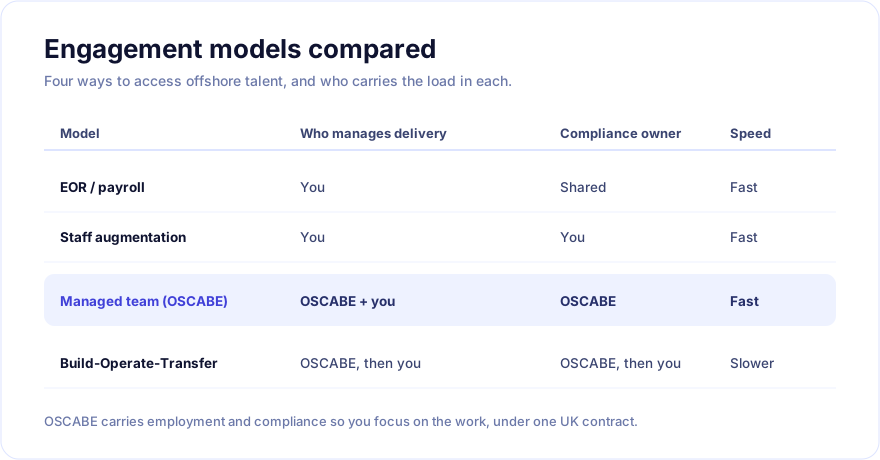
The table below contrasts the two common scaling routes for a startup.
| Factor | All in-house onshore | Onshore core + managed offshore pods |
|---|---|---|
| Cost per engineer | High (UK fully loaded) | Lower, predictable monthly fee |
| Time to add capacity | Weeks to months per hire | Days to a few weeks per pod |
| Recruitment and bench cost | You carry it | Included in the fee |
| Employer compliance abroad | N/A or you build it | Handled under one UK contract |
| Retention risk | You carry it | Managed by the provider |
| Scaling speed | Limited by hiring | Add or resize pods as needed |
A single managed pod from £7,500 per month can give you several engineers for less than the fully-loaded cost of one or two UK seniors, which is why pods are such an effective way to extend a startup's runway. For the full cost picture, see the true cost of an offshore development team and the India vs UK developer salary comparison.
The deeper saving is in predictability. Startups rarely fail because a single hire was expensive; they get into trouble when costs are unpredictable and capacity cannot flex with the roadmap. A managed pod model lets you add capacity when you raise or land a big customer, and resize when you need to, without redundancy processes or recruitment lag.
What are the pitfalls of scaling with offshore pods?
Most offshore scaling failures are avoidable and come down to a handful of recurring mistakes.
- Offshoring direction, not just delivery. If a pod has no clear owner onshore, output drifts. Keep product direction and architecture anchored in your core team.
- Treating a pod as ticket-takers. Pods that only execute handed-down tasks never build context. Give them ownership of an area.
- Ignoring time-zone reality. Engagements with almost no overlap turn every question into a day's delay. Prioritise 4 to 6 hours of daily overlap so collaboration is live.
- Underinvesting in onboarding. The first weeks set the trajectory. A structured onboarding into your codebase, rituals and standards pays back quickly.
- Choosing raw marketplace contractors over a managed team. The cheapest individual rate often costs more once you add recruitment, management, compliance and churn. A managed pod folds those in.
Avoiding these is mostly structural rather than effortful: pick the right model, give pods real ownership, insist on overlap, and onboard properly. Do that and a 30-person organisation built around a strong core and several managed pods can ship as effectively as a much larger, more expensive all-onshore team.
Frequently asked questions
When is the right time for a startup to add an offshore pod?
When your committed roadmap clearly exceeds your current delivery capacity and you have at least one engineer who can give a pod direction. For most startups that is somewhere around six to twelve engineers. Before that, keep your founding team tight and onshore so architecture and product direction stay anchored.
What is the difference between an offshore pod and staff augmentation?
Staff augmentation rents you individual contractors whom you manage and integrate yourself. A managed pod is a dedicated, cross-functional team that owns an area, is managed for you, and stays together. The pod model builds compounding context and offloads management and retention. See staff augmentation vs managed team vs BOT for the full comparison.
How much does an offshore pod cost for a startup?
OSCABE managed pods start from £7,500 per month, billed as one predictable fee covering employment, vetting, management, retention and UK GDPR-aligned compliance under one UK contract. A single pod typically gives you several engineers for less than the fully-loaded cost of one or two UK seniors.
Can offshore pods really keep up with a fast startup pace?
Yes, when they have 4 to 6 hours of daily overlap, own a defined area, and share your rituals. The pace problem usually comes from poor overlap or treating the pod as ticket-takers, not from location. A managed pod that is inside your process and accountable for an area can match the cadence of your core team.
Scale your engineering team without scaling your fixed cost
Scaling from 0 to 30 does not mean hiring 30 expensive onshore engineers. It means keeping a strong core for direction and architecture, then extending delivery with dedicated, managed offshore pods that own real areas of your product. Done well, that gives you the output of a large team at a fraction of the fixed cost and hiring lag.
To plan your pod roadmap, contact OSCABE or explore managed teams and pods. You can also browse the engineers we provide. We will map dedicated pods to your roadmap with transparent monthly pricing under one UK contract.