
Structure your engineering team to match its size: a single shared group up to about six or seven engineers, then split into outcome-owning pods of five to eight, appoint a tech lead per pod, and add a dedicated engineering manager once one person can no longer both lead the work and develop the people. The most common scaling mistake is keeping a flat startup structure too long, which buries decisions in one founder's head and grinds delivery to a crawl.
Team structure is not org-chart bureaucracy; it is how you keep delivery fast as headcount grows. The right shape at ten engineers is wrong at forty, and clinging to an early structure is what turns a fast startup into a slow one. This guide walks through each stage, the ratios that work, and how to add capacity, including managed pods, without breaking the structure you have built.
Why structure matters as you grow
A small team needs almost no structure: everyone knows everything, communication is one conversation, and a single person can hold the whole roadmap. That is a genuine advantage, and you should not impose process before you need it. The trap is leaving it too long.
As headcount rises, the number of communication paths grows far faster than the number of people, so an unstructured group of fifteen spends more time coordinating than building. Decisions queue behind one or two overloaded people, ownership blurs, and the strongest engineers start to feel like ticket-takers. Restructuring is not a sign of failure; it is the natural response to growth, and doing it a little early beats doing it painfully late.
The stages of team structure
Most teams pass through four recognisable stages. The headcount bands are guides, not rules; the real triggers are the symptoms, not the numbers.
| Stage | Size | Structure | Trigger to evolve |
|---|---|---|---|
| Founding team | 1-7 engineers | One flat group, founder or lead steers | Coordination overhead, decisions queueing |
| First split | 8-15 | 2 pods with a tech lead each | One person can't hold the whole roadmap |
| Multiple pods | 16-40 | Outcome-owning pods, leads, first EMs | Leads stretched between people and delivery |
| Scaling org | 40+ | Pods grouped under managers, platform team | Cross-pod dependencies, duplicated effort |
The arrows between stages are where most pain lives. Move deliberately, communicate the why, and resist the urge to reorganise more often than the team can absorb.
Founding team: stay flat on purpose
Up to roughly six or seven engineers, a single group is the right answer. Process here is mostly a cost. Keep ownership informal but explicit, write decisions down so context is not trapped in one head, and protect the speed that small size gives you. The only thing to watch is the early warning sign of overload: when one person becomes the bottleneck for every decision, the next stage is calling.
First split: form your first pods
Somewhere around eight to fifteen engineers, split into two pods, each owning a clear outcome such as a product area or a customer journey rather than a technology layer. Outcome-owning pods ship faster than layer-based teams because they can deliver value end to end without waiting on another team.
- Give each pod a mission and a metric it owns, not just a backlog.
- Keep pods cross-functional enough to ship independently.
- Appoint a tech lead per pod, the first formal leadership role.
Multiple pods: leads and the first managers
From around sixteen engineers you will run several pods, and this is where the tech-lead and engineering-manager roles must separate. A tech lead drives technical direction and quality; an engineering manager develops people, handles performance and removes organisational friction. Asking one person to do both well past a handful of reports is where burnout and dropped balls begin.
Scaling org: groups, platform and topology
Past forty engineers, pods get grouped under managers, and you typically need a platform or enablement team so product pods are not each solving the same infrastructure problem. At this size, deliberately managing dependencies between pods, and minimising the handoffs that slow delivery, becomes a first-class concern.
Tech leads, managers and the right ratios
Two role distinctions and two ratios do most of the work in keeping a growing team healthy.
The first distinction is tech lead versus engineering manager. Conflating them is the most common structural error: you either get a brilliant engineer drowning in one-to-ones, or a capable manager making technical calls they are no longer close enough to make. Separate them as soon as a pod is big enough to justify it.
The ratios:
- Manager to engineer: somewhere around five to eight reports per engineering manager is a common healthy band. Below that and managers tend to micromanage; above it and people stop getting real support.
- Senior to junior: a workable blend is roughly one senior to every two or three mid-and-junior engineers, enough seniority to mentor and set standards without paying for an all-senior team. We unpack this trade-off in senior versus mid-level engineer hiring.
These are starting points to adjust to your context, not targets to hit for their own sake. A team doing high-uncertainty research skews more senior; a team with strong process and well-understood work can carry more juniors.
Adding capacity without breaking structure
Growth usually means adding people faster than you can hire and train them locally, and how you add capacity determines whether your structure holds or fractures. Bolting on individual contractors with no shared ownership tends to fragment a pod; adding a coherent, dedicated unit preserves it.
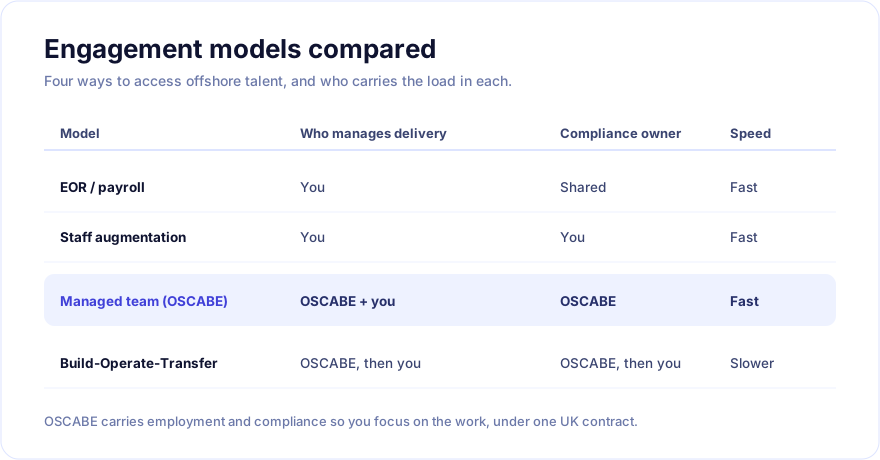
This is where a managed pod fits the model cleanly. Instead of stitching together freelancers, you add a dedicated, pre-formed unit that maps onto your pod structure, with the vetting, employment and management already handled. OSCABE provides dedicated managed engineers and whole pods from India and the Middle East under one UK contract, working a 4 to 6 hour overlap so they operate inside your existing structure rather than alongside it.
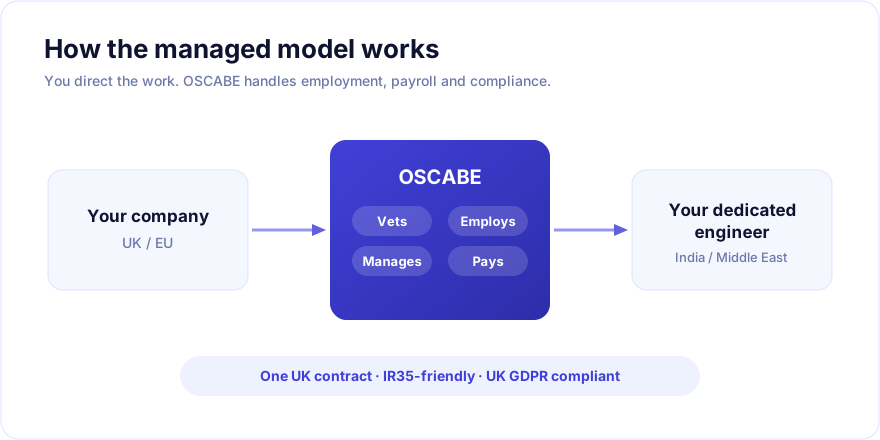
A managed pod slots into a stage cleanly: it can be the second pod in your first split, an extra outcome-owning pod as you scale, or a platform capability you do not want to staff entirely in-house. You direct the work and own the roadmap; we handle vetting, employment, local management and replacement. The full playbook for standing one up is in scaling a startup engineering team with offshore pods, and the first-month plan in how to onboard an offshore development team in 30 days. See team options on /teams.
Frequently asked questions
When should a startup split its engineering team into pods?
Split when one person can no longer hold the whole roadmap in their head and decisions start queueing behind a single bottleneck, which usually happens somewhere around eight to fifteen engineers. Form pods around outcomes, a product area or a customer journey, rather than technology layers, so each can ship value end to end. Doing this a little early is far less painful than waiting until coordination overhead has already slowed delivery to a crawl.
What is a healthy manager-to-engineer ratio?
A common healthy band is around five to eight engineers per engineering manager, adjusted for the team's seniority and the complexity of the work. Fewer reports and managers tend to micromanage capable people; many more and individuals stop getting meaningful career support and feedback. Crucially, keep the engineering-manager role distinct from the tech-lead role, because asking one person to own both people and technical direction past a few reports leads to burnout and dropped balls.
When does a team need a dedicated engineering manager?
You need a dedicated manager once the person leading a pod can no longer both drive the technical work and properly develop the people, typically as the pod passes a handful of engineers. Until then a tech lead can carry light people responsibilities, but performance, growth and friction-removal deserve real focus. The signal is usually a stretched lead, slipping one-to-ones, and engineers who feel unsupported even though delivery looks fine on the surface.
How do you add offshore engineers without disrupting team structure?
Add a dedicated, pre-formed pod that maps onto your existing structure rather than scattering individual contractors across teams, which fragments ownership. A managed pod arrives vetted, employed and locally managed, works inside your time-zone overlap, and slots in as a coherent unit you direct. With OSCABE that pod operates under one UK contract, so it strengthens your structure rather than adding coordination overhead; see /how-it-works for the mechanics.
Build the right shape for your stage
Whether you are forming your first pod or grouping pods under managers, the right structure keeps delivery fast as you grow. OSCABE provides dedicated, fully-managed engineers and pods from India and the Middle East under one UK contract, ready to slot into your topology. Tell us where you are scaling on /contact and browse vetted engineers on /engineers.