
Hire a senior engineer when the problem is ambiguous, the architecture is unset, or you need someone to mentor and set standards; hire a mid-level engineer when the path is clear and you need reliable delivery on well-defined work. The costly mistake in both directions is hiring all-senior because it feels safe, or all-mid to save money; the right answer is almost always a deliberate blend. Seniority is about judgement and autonomy, not years on a CV.
Get the mix wrong and you either overpay senior engineers to do routine work they find unrewarding, or you load junior people with architectural decisions they are not yet equipped to make. This guide defines what each level actually buys, compares cost against output, and sets out a blend that delivers without breaking the budget, plus how a managed model lets you buy either level fully loaded.
What seniority actually means
Seniority is not tenure. A useful definition is the size of the problem someone can own with little guidance and the degree of ambiguity they can absorb. By that measure, the difference between levels is about autonomy, judgement and influence on others, not the number of years on a CV.
- A mid-level engineer reliably delivers well-defined features end to end, makes sound local decisions, and needs direction on architecture and ambiguous problems.
- A senior engineer owns ambiguous problems, sets technical direction, anticipates failure modes, and multiplies the team by mentoring and reviewing.
- A lead or staff engineer influences beyond their own output, shaping how multiple people and pods work.
This is why two people with identical tenure can sit at different levels, and why your assessment process has to test judgement directly rather than trusting a job title. Title inflation makes this worse: the same label can mean very different things across companies, so a "senior" badge from one employer is not interchangeable with another. The framework for testing the real signal is in how to vet software engineers in 2026.
When to hire senior
Reach for senior when the cost of a wrong technical decision is high or the path is genuinely unclear. Specific triggers:
- You are setting architecture or making foundational choices that are expensive to reverse.
- The problem is ambiguous and needs someone who can define it, not just execute it.
- Your team lacks mentorship and standards, and you need someone to raise the bar for everyone.
- You are operating at scale or with high reliability needs where failure modes must be anticipated, not discovered in production.
A senior engineer in these situations pays for themselves many times over, because the leverage is in the decisions they prevent you from getting wrong and the people they level up.
When to hire mid-level
Reach for mid-level when the hard thinking is largely done and you need dependable throughput. Triggers:
- The architecture is settled and the work is well-scoped delivery.
- You need capacity to ship a known roadmap rather than to define one.
- You already have senior coverage to set direction and review, so a mid-level engineer has the support to thrive.
- You want a healthy pyramid, because an all-senior team is both expensive and prone to friction when everyone wants to set direction.
Mid-level engineers are the backbone of delivery. Under-hiring them and over-hiring senior is a common and costly imbalance: you end up paying premium rates for routine work that the senior engineers find unrewarding anyway, and the team loses the natural mentoring relationship that helps mid-level people grow into the senior roles you will need next.
Cost versus output: the real comparison
The instinct to "hire the best" ignores that output does not scale linearly with seniority or cost, and that team composition matters more than any individual hire.
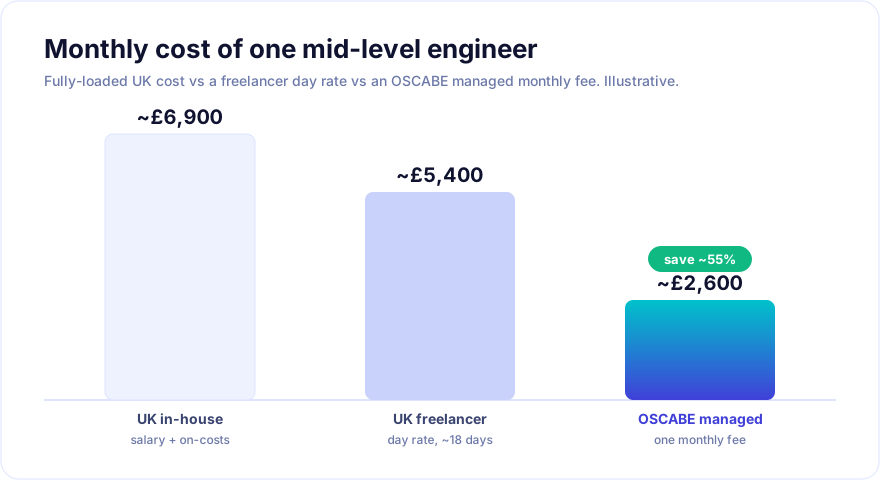
A senior engineer typically costs meaningfully more than a mid-level one, but does not produce proportionally more routine code; their premium buys judgement, direction and multiplier effect, which are wasted on well-defined tickets. The table below frames the trade-off.
| Factor | Mid-level engineer | Senior engineer |
|---|---|---|
| Best for | Well-defined delivery, known roadmap | Ambiguity, architecture, mentoring |
| Autonomy needed | Direction on hard problems | Operates independently, sets direction |
| Relative cost | Lower | Meaningfully higher |
| Multiplier effect | Limited | Levels up the whole team |
| Risk if mis-hired | Stuck on ambiguous work | Overpaying for routine work, friction |
According to public market data and industry research, raw output measured in shipped features does not rise in proportion to seniority or salary, which is exactly why an all-senior team is poor value. The return on a senior hire comes from leverage, not volume, so place them where leverage exists.
The right blend
The healthiest teams look like a pyramid, not a flat line of senior engineers. A workable starting blend is roughly one senior to every two or three mid-and-junior engineers, with the senior setting standards, reviewing and unblocking, and the mid-level engineers carrying the bulk of delivery.
The mix should flex with the work. A team tackling novel, high-uncertainty problems skews more senior; a team executing a well-understood roadmap with strong process can carry more mid-level and junior engineers profitably. This blend also supports retention, because mid-level engineers grow under senior mentorship and senior engineers stay engaged when they are leading rather than grinding tickets, a dynamic we explore in retaining engineering talent strategies. It also maps cleanly onto pod structure, covered in structuring an engineering team from startup to scale.
Buying the right level fully loaded
Whichever level you need, hiring it locally carries the same overheads: sourcing, a senior-time-heavy vetting loop, employer taxes, equipment and the risk of a mis-hire. A managed model lets you buy a specific seniority that has already been assessed to that level.
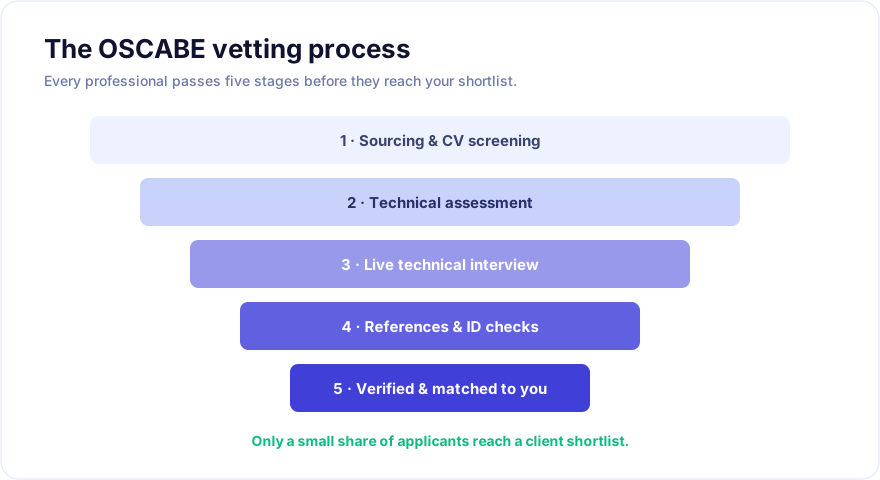
Because the vetting tests judgement and autonomy directly, a managed provider can match you to a genuinely mid-level or genuinely senior engineer rather than someone whose CV merely claims it. OSCABE vets, employs and manages dedicated engineers from India and the Middle East at the seniority you specify, under one UK contract, with a dedicated managed engineer starting from around £2,000 per month. You direct the work and confirm the fit; we carry sourcing, assessment, employment and replacement, and typically match within around 72 hours. See how the model works on /how-it-works and browse profiles by level on /engineers.
Frequently asked questions
Is it cheaper to hire two mid-level engineers or one senior?
It depends entirely on the work, not the headcount maths. For a well-defined roadmap, two mid-level engineers usually deliver more throughput per pound than one senior, because routine delivery does not need senior judgement. For ambiguous problems, unset architecture or a team lacking standards, one senior is the better buy, because their leverage prevents expensive mistakes and levels up everyone else. Match the level to the nature of the problem before comparing cost.
How do you tell if a candidate is genuinely senior?
Test judgement and autonomy directly rather than trusting tenure or a job title. In a system-design conversation, a genuine senior clarifies requirements first, names trade-offs unprompted, reasons about failure modes and knows when a boring approach beats a clever one. In code review they spot the subtle issue and reason about maintainability, not just correctness. Years on a CV are context, not proof, which is why a structured assessment matters more than the title someone arrives with.
What is a healthy ratio of senior to mid-level engineers?
A common starting point is roughly one senior engineer to every two or three mid-and-junior engineers, flexed to the work. High-uncertainty, research-heavy teams skew more senior; teams executing a well-understood roadmap with strong process can carry more mid-level and junior engineers profitably. The aim is a pyramid where senior engineers set direction and mentor while mid-level engineers carry the bulk of delivery, which is both more affordable and better for retention than an all-senior team.
Can a managed provider supply a specific seniority level?
Yes, provided the provider's vetting actually assesses judgement and autonomy rather than forwarding CVs. A genuine managed model matches you to an engineer verified at the level you need, mid-level or senior, and stands behind the fit with a replacement policy. OSCABE vets to a defined standard and presents engineers at the specified seniority under one UK contract, so you are buying an assessed level, not a self-reported one; see our five-stage vetting framework for how that assessment works.
Get the right level, already vetted
Whether you need a senior to set direction or mid-level engineers to ship a known roadmap, we match you to the seniority you specify, already assessed. OSCABE vets, employs and manages dedicated engineers from India and the Middle East under one UK contract. Tell us the level and the work on /contact and browse vetted profiles on /engineers.