
Engineers stay when they have room to grow, autonomy over how they work, genuine recognition and fair, transparent pay. Retention is rarely solved with a one-off pay rise; it is the cumulative result of a job that keeps getting more interesting and a manager who removes friction. Get those four levers right and you keep your best people; get them wrong and no compensation package will hold them for long.
Replacing an engineer is expensive in ways that rarely show on a single line of a budget: recruitment, months of lost productivity, the ramp time of a replacement, and the quiet drag on morale when good people leave. This guide sets out the levers that actually move retention, then explains why dedicated engineers in a well-run managed model tend to stay longer than the offshore stereotype suggests.
What retention really costs
Before the levers, the stakes. The fully-loaded cost of losing a mid-to-senior engineer typically runs to a large fraction of their annual salary once you count recruitment fees, the hiring loop, onboarding, and the months before a replacement reaches full output. According to public market data and industry research, time-to-productivity for an experienced engineer is commonly measured in months, not weeks, which is why churn is so corrosive: every departure resets that clock.
There is a compounding effect too. When a senior engineer leaves, undocumented context leaves with them, which raises bus-factor risk and slows everyone who depended on that knowledge. We treat that specific danger in knowledge transfer and bus-factor risk in offshore teams. Retention, then, is not a soft HR metric; it is one of the highest-leverage things an engineering organisation can protect.
The four levers that keep engineers
Most durable retention comes down to four levers. Pay sets the floor, but the other three are what make someone turn down a recruiter's call.
| Lever | What it looks like in practice | What it prevents |
|---|---|---|
| Growth | Clear progression, new problems, mentorship, learning budget | Stagnation and the "I've stopped learning" exit |
| Autonomy | Ownership of outcomes, say over how work is done, low micromanagement | Frustration and the feeling of being a ticket-taker |
| Recognition | Specific, timely credit; visible impact; fair promotion | Feeling invisible and undervalued |
| Fair pay | Transparent, benchmarked, reviewed without a counter-offer fight | Resentment and the open-market job search |
The order matters. A fair salary stops people leaving for money, but it does not make them want to stay; growth, autonomy and recognition do that.
Growth: keep the work getting harder
Engineers leave roles that have stopped teaching them. Retention improves when there is a visible path, whether that is deeper technical mastery or a move toward leadership, and when people are regularly handed problems slightly beyond their current reach.
- Offer a dual ladder so strong engineers can grow without being forced into management.
- Rotate people onto new problems and systems before boredom sets in.
- Fund learning in time as well as money; an afternoon to go deep beats a voucher that is never used.
Autonomy: trust people with outcomes
High performers want to own a result, not be told the steps. Autonomy means clear goals, context on why they matter, and the freedom to choose the how. Micromanagement is one of the fastest ways to lose your best engineers, because the people most capable of working independently are the ones most insulted by being watched.
Recognition: make impact visible
Recognition is cheap and chronically underused. Specific, timely credit, "your refactor cut our error rate", lands far harder than a generic annual review line. Make impact visible across the team, ensure promotion is fair and explained, and never let the only path to a raise be threatening to leave.
Fair pay: remove the reason to look
Pay does not have to be top of market, but it has to be fair, benchmarked and transparent, and it has to be reviewed proactively. The damage is rarely the number itself; it is the resentment of discovering a new joiner earns more, or having to resign to trigger a fair conversation. Transparency here mirrors the transparent-fee principle we apply to engagements, covered in day rate versus salary versus managed remote developers.
Why managed dedicated engineers stay
A common worry about offshore and remote engineers is that they will churn, treating the role as a stepping stone. In a transactional marketplace model that fear is often justified, because nothing binds the engineer to your work or to a stable employer. A managed dedicated model is structurally different.
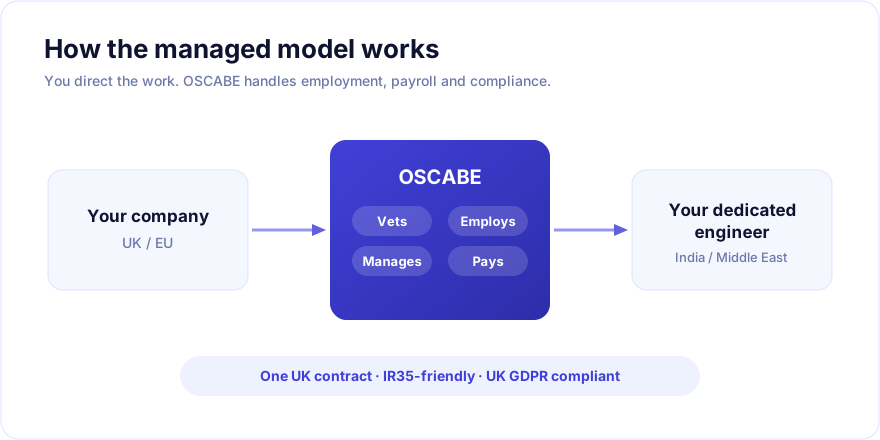
The difference is structural, not just cultural. In a managed model the engineer is employed by a stable provider, dedicated to one client rather than juggling gigs, supported by local management, and paid fairly and on time in their own market. That removes the three biggest drivers of offshore churn at once: employment insecurity, context-switching across clients, and pay that lags the local market.
- Dedicated, not shared: the engineer works on your product full time, builds real ownership, and is not pulled between competing clients.
- Employed and supported: a stable employer of record plus local management provides the career conversations, benefits and pastoral support that a freelance platform never will.
- Fairly paid in market: compensation benchmarked to the local market, reviewed proactively, removes the open-market itch.
- Growth path: progression, mentorship and new problems are part of the engagement, not an afterthought.
The practical result is that the levers in the table above are applied on your behalf by a provider whose entire business depends on engineers staying. OSCABE employs, manages and supports dedicated engineers from India and the Middle East under one UK contract, which aligns our incentives with your retention. See how that works on /how-it-works and what a managed team looks like on /managed-teams.
Choosing an engagement model with retention in mind
Retention should influence which engagement model you choose in the first place, because some models actively work against it.
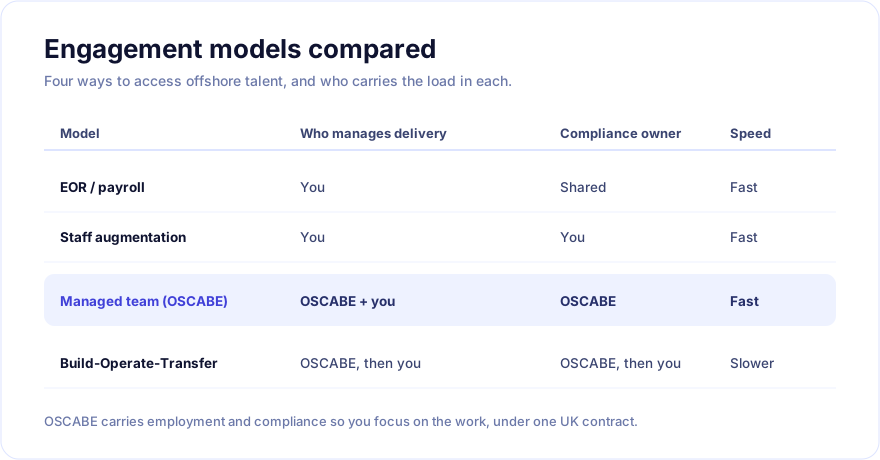
A pure staff-augmentation or marketplace arrangement optimises for flexibility and speed of starting, but it offers the engineer little stability and you little continuity, so churn is the norm. A managed team or a Build-Operate-Transfer model optimises for the opposite: dedicated people, real ownership and a stable employer, which is exactly the soil in which retention grows. If continuity matters to your roadmap, weight the model choice accordingly, a theme we develop in scaling a startup engineering team with offshore pods.
Frequently asked questions
What is the single biggest driver of engineering retention?
There is no single lever, but the most under-appreciated one is growth: engineers leave roles that have stopped teaching them, even when the pay is good. Fair pay removes the reason to leave for money, while growth, autonomy and recognition are what make someone want to stay. Treat them as a system rather than reaching for a pay rise every time someone resigns, because a reactive counter-offer rarely fixes the underlying cause.
Do offshore and remote engineers churn more than local hires?
In a transactional marketplace model they often do, because nothing ties the engineer to your work or to a stable employer. In a managed dedicated model the dynamics reverse: the engineer is employed by a stable provider, works only on your product, is paid fairly in their local market and has a real career path. Those structural factors, rather than geography, are what determine whether someone stays.
How much does it cost to replace an engineer?
Once you count recruitment, the hiring loop, onboarding and the months before a replacement reaches full productivity, the fully-loaded cost typically runs to a large fraction of annual salary, according to public market data and industry research. The hidden cost is the context that leaves with the person, which raises bus-factor risk and slows the wider team. That is why proactive retention is almost always cheaper than repeated rehiring.
How does a managed model improve retention?
A managed provider employs the engineer, dedicates them to one client, supports them with local management and benchmarks their pay to the local market, which removes the main drivers of offshore churn. Because the provider's business depends on engineers staying, the growth, recognition and fair-pay levers are applied continuously rather than left to chance. With OSCABE that support is built into a single UK contract, aligning our incentives with your continuity.
Keep a team that stays
If churn is undermining your roadmap, a dedicated managed model is built to hold the people you depend on. OSCABE vets, employs, manages and supports engineers from India and the Middle East under one UK contract, with fair pay, local management and a real growth path. Tell us what you need on /contact and browse vetted, dedicated profiles on /engineers.