
A UK startup should hire engineers when validated demand outpaces what the founding team can build, not before, and should prioritise cost control and speed over headcount vanity. In 2026 that usually means a small senior UK core for product and architecture, extended by a managed remote pod for build capacity, so a tight budget buys more delivery. A dedicated, fully-managed remote engineer through OSCABE starts from £2,000 per month all-in, and a managed pod from £7,500 per month, which lets an early-stage team ship without carrying the full loaded cost of multiple UK hires.
This guide is a practical playbook: when to make your first and subsequent engineering hires, where to hire, how to keep cost under control, and how managed pods fit a startup's economics. Figures are expressed as ranges informed by public salary guides and market data such as recruiter surveys.
When should a startup hire its first engineers?
The trigger for hiring is evidence, not ambition. You hire when there is validated demand the current team cannot serve, a roadmap that is clearly resourced-constrained, and runway to support the role through its ramp-up. Hiring ahead of that burns cash and creates idle capacity; hiring behind it stalls growth and burns out founders.
A simple sequence works for most early-stage teams:
- Founders or a technical co-founder build the first version. Keep the team tiny while you find product-market fit.
- First hire when delivery is the bottleneck. Usually a senior generalist who can own large parts of the product.
- Add specialists as the product matures. Frontend, backend, DevOps and data depth, in the order your roadmap demands.
- Add capacity, not just seniority. Once architecture is stable, the constraint is often throughput, which is where pods help.
The mistake to avoid is hiring for a future org chart. Hire for the next two quarters of validated work, and revisit.
Timing the first specialist hires is its own judgement call. A common pattern is to bring in dedicated frontend or backend depth once the generalist core is spending more time firefighting than building, and to add DevOps or data capability when deployment, reliability or analytics become recurring bottlenecks rather than occasional tasks. Pulling these hires forward too early means paying senior salaries for work that is not yet there; leaving them too late means your best generalists burn out covering gaps outside their strengths. Reviewing the constraint every quarter, and being willing to flex capacity up or down, keeps the team matched to the roadmap rather than to a fundraising headline.
Where should a UK startup hire engineers?
Location is a cost and speed decision. London offers the deepest pool but the highest salaries and office costs; regional hubs such as Manchester, Edinburgh and Bristol offer strong talent 10% to 20% cheaper; managed remote pods offer vetted senior capacity below any UK location with a fast matching window. The table compares the options for a cash-conscious startup.
| Option | All-in cost (mid-level) | Speed | Best for |
|---|---|---|---|
| London hire | £72k - £100k | 6 - 14 weeks | Roles needing local presence |
| Regional UK hire | £62k - £88k | 5 - 12 weeks | Lower-cost core team |
| UK day-rate contractor | £88k - £130k/yr | 2 - 6 weeks | Short surges, plus IR35 admin |
| Managed remote pod | from £7,500/mo | ~72 hours | Build capacity, predictable cost |
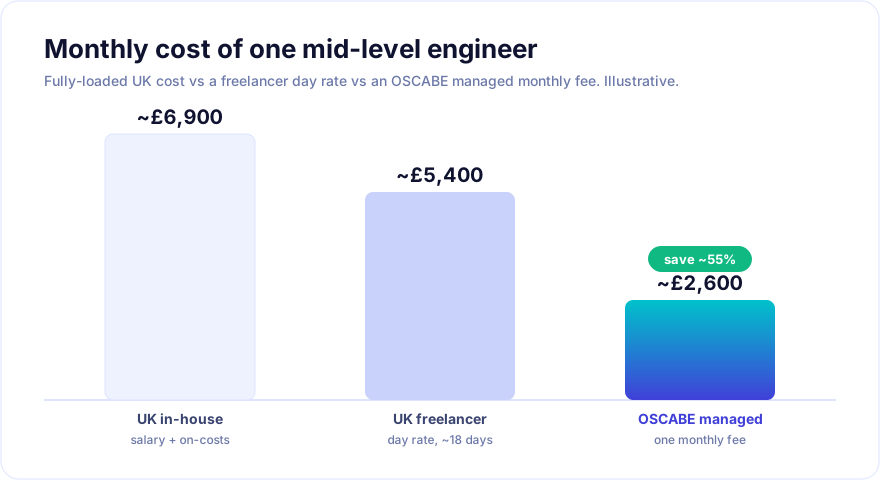
For most startups the answer is a blend: a small senior UK or regional core that holds product context and architecture, plus a managed remote pod that turns roadmap into shipped code. The core carries the institutional knowledge and customer-facing decisions, while the pod supplies the throughput to ship against a roadmap that is usually larger than the budget for permanent UK headcount.
How to control engineering cost as a startup
Cost control for an engineering team is mostly about avoiding the hidden costs and the expensive mistakes, not squeezing salaries. Four principles matter most.
First, budget on the loaded cost, not the salary. A UK hire costs 25% to 40% above base once you add employer National Insurance at 13.8% (see HMRC's rates), pension, recruitment and overhead. Model that number, not the advert.
Second, avoid the cost of a bad hire. Under-pressure hiring drops the bar; a senior who leaves at six months means paying the agency fee again and absorbing the ramp-up. Failed mid-level hires commonly cost well over £30,000 once lost output is included.
Third, keep fixed costs flexible early. Permanent headcount is a long commitment for a startup whose roadmap may pivot. Managed pods give you dedicated capacity you can scale up or down without redundancy cost.
Fourth, do not pay London prices for remotely-delivered work. Most build work does not need to sit in an expensive office. A managed remote pod delivers it at a predictable monthly fee, which also makes runway planning far simpler because the line does not move with NI thresholds, pay reviews or agency fees.
A useful discipline is to express every hiring decision as a cost-per-shipped-outcome rather than a salary. A senior UK hire who spends their first two months ramping up is expensive capacity that is not yet delivering, whereas a vetted pod that starts inside a week begins converting roadmap into product almost immediately. For a cash-constrained startup, that difference in time-to-value often matters more than the raw salary comparison.
For the full economics, read the total cost of ownership: offshore vs in-house and our India vs UK developer salary comparison for 2026.
How managed pods fit a startup's economics
A managed pod is a dedicated, fully-managed remote team, recruited in India or the Middle East, employed and managed by OSCABE under one UK contract, with a 4 to 6 hour overlap with UK and EU hours. It is not a freelance marketplace and not body-shop staffing. The single monthly fee covers salary, employer taxes, recruitment, replacement, equipment, payroll, HR and compliance.
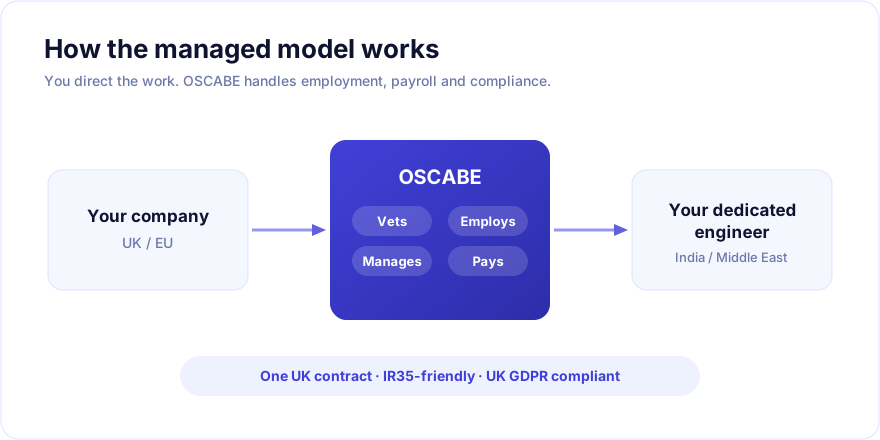
For a startup, this changes the maths in three ways:
- More delivery per pound. A pod from £7,500 per month buys more build throughput than the loaded cost of a single senior UK hire.
- Speed. OSCABE typically matches engineers within around 72 hours, against weeks or months for a UK search.
- Flexibility. You scale capacity to the roadmap without carrying redundancy risk.
The pod model also sidesteps the IR35 administration that makes UK contractors awkward for small teams, because it is a genuine business-to-business managed service rather than the engagement of individual contractors. You can see how the model works on how it works or explore pod and team options.
A sensible early-stage shape is a senior UK or regional founder-engineer holding product and architecture, plus a managed pod of two to four engineers delivering the roadmap. As you raise and grow, you add UK seniority where local presence genuinely helps and scale the pod where throughput is the constraint. For more on scaling this way, see scaling a startup engineering team with offshore pods.
Frequently asked questions
When should a startup make its first engineering hire?
When delivery becomes the bottleneck to validated growth and you have runway to support the role through ramp-up. Founders or a technical co-founder should build the first version; the first hire is usually a senior generalist who can own large parts of the product. Hiring ahead of validated demand burns cash on idle capacity.
Is it cheaper for a startup to hire in-house or use a managed pod?
A managed pod is usually more cost-effective for build capacity. A UK mid-level hire costs around £62,000 to £100,000 fully loaded, while a managed pod starts from £7,500 per month as a single fee with compliance, equipment and replacement included. Most startups keep a small senior UK core and use a pod for throughput. See our guide to hiring remote developers from India.
How do startups control engineering costs in 2026?
Budget on fully-loaded cost (25% to 40% above salary), avoid expensive bad hires by not dropping the bar under pressure, keep fixed costs flexible with scalable pods, and avoid paying London prices for work that is delivered remotely. A managed remote model addresses all four at once with predictable monthly pricing.
Do managed pods work for early-stage products?
Yes, provided architecture and product direction sit with a senior owner, usually in-house. A managed pod delivers roadmap throughput at predictable cost and can scale up or down without redundancy risk, which suits the uncertainty of early-stage. It is a genuine managed service, so it also avoids the IR35 admin of UK contractors.
Build a lean, fast engineering team
If you are scoping your 2026 engineering plan, model a small senior core against a managed pod for build capacity and compare on loaded cost, speed and flexibility. When you want concrete figures for your roadmap, talk to OSCABE for a transparent monthly quote under one UK contract, or browse vetted profiles on our engineers page to see the calibre and specialisms available now.