
The total cost of ownership (TCO) of an in-house UK developer in 2026 is typically 1.4 to 1.7 times their base salary once you add employer National Insurance, pension, recruiter fees, equipment, software, office or remote allowance, bench time and the cost of attrition. A £60,000 mid-level engineer can carry a real annual TCO of roughly £90,000 to £100,000 when every line is counted. A dedicated, fully-managed offshore developer through OSCABE starts from £2,000 per month, around £24,000 per year, with most of those hidden costs already inside the fee.
Most budgets compare salary against an offshore monthly rate and miss the layers in between. This guide builds the TCO line by line, shows the hidden costs that quietly inflate an in-house hire, and puts a calculator-style table next to the managed offshore alternative so you can plan a realistic 2026 number.
What does total cost of ownership actually include?
Total cost of ownership is the all-in annual cost of keeping one productive engineer in their seat, not the headline you advertise. Salary is the visible tip. Underneath sit statutory on-costs, one-off and recurring overhead, and the costs that only show up over time, such as recruitment amortised across tenure and the productivity you lose to attrition.
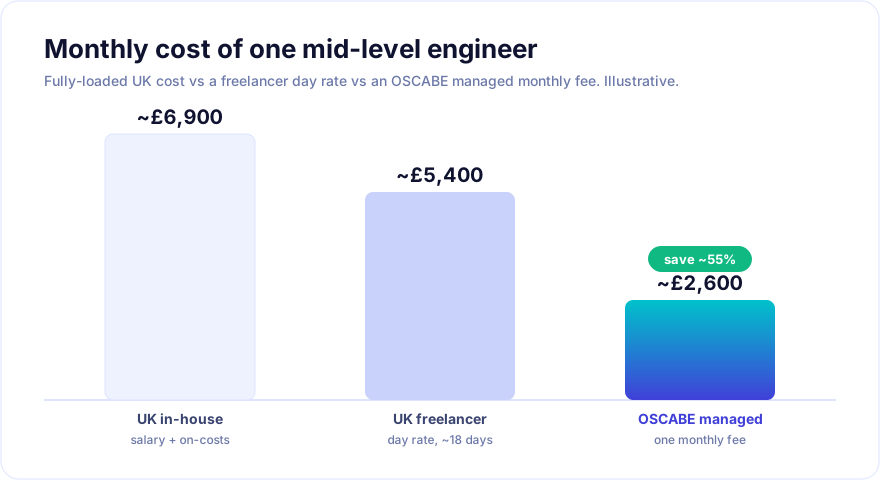
The components fall into four groups:
- Statutory on-costs. Employer NI at 13.8% above the secondary threshold, per HMRC guidance on National Insurance rates, plus auto-enrolment pension of at least 3% under workplace pension rules.
- Direct overhead. Laptop and hardware, software licences and SaaS seats, office space or a remote allowance, and a share of HR, payroll and IT support.
- Acquisition cost. Recruiter or agency fees, typically 15% to 25% of first-year salary, amortised over the expected tenure rather than charged to year one alone.
- Time-based losses. Bench or ramp time before an engineer is fully productive, and the cost of attrition when they leave and you backfill.
Each group is easy to under-count in isolation. Together they explain why a salary line of £60,000 turns into a TCO closer to £95,000.
The hidden costs most budgets miss
The statutory on-costs are at least predictable. The ones that quietly distort a budget are the time-based and overhead lines, because they do not appear on the offer letter.
Recruitment, properly amortised. A 20% agency fee on a £60,000 hire is £12,000. Spread over an average UK developer tenure of roughly two and a half years, that is still around £4,800 per year, every year, for as long as you keep refilling the role.
Bench and ramp time. A new engineer rarely ships at full output from week one. Even a strong hire often needs one to three months to reach steady-state productivity on your codebase. That ramp is paid salary against reduced output, a real cost that recurs with every replacement.
Attrition and backfill. When someone leaves, you pay the recruiter fee again, absorb a vacancy gap, and re-run the ramp. Public market data and salary guides typically put developer attrition in the mid-teens percentage range per year in hot markets, which means a portion of your team is effectively always being re-acquired.
Management and overhead drag. Line management time, HR administration, equipment refresh cycles and licence renewals are genuine costs that scale with headcount. They rarely sit in the hiring business case, yet they are paid every month.
A managed offshore model folds most of these into a single fee. There is no separate recruiter invoice, replacement is handled within the service, and equipment, payroll and HR sit with the provider. For the wider picture on this, see the true cost of an offshore development team.
TCO calculator: in-house UK vs managed offshore
Here is the full stack for a mid-level engineer on a £60,000 base, built as a calculator-style breakdown. Figures are indicative 2026 estimates drawn from public market data and salary guides, not numbers from a single named study.
| Cost line | In-house UK (annual) | Managed offshore (annual) |
|---|---|---|
| Base salary / equivalent | £60,000 | included |
| Employer NI (approx 13.8%) | £7,100 | not applicable |
| Pension (3% minimum) | £1,800 | included |
| Recruitment (20% fee, amortised) | £4,800 | included |
| Equipment and hardware | £1,500 | included |
| Software and SaaS licences | £2,000 | included |
| Office or remote allowance | £4,500 | included |
| HR, payroll and IT support | £3,500 | included |
| Bench / ramp time (productivity loss) | £4,000 | minimal, vetted and matched |
| Attrition and backfill provision | £6,000 | included (replacement in service) |
| Management overhead | £3,000 | shared with provider |
| Total cost of ownership | roughly £98,200 | from £24,000 |
The advertised £60,000 becomes a real-world figure near £98,000 once every line is counted, while a managed remote employee starts from £2,000 per month all-in. The offshore figure is not a stripped-down rate plus surprises later; the recurring hidden costs are already inside it.
How the numbers shift by seniority
On-costs are percentage-based, so the gap widens as salaries rise. The table below applies the same TCO logic across seniority bands using realistic 2026 UK ranges.
| Seniority | Typical UK base | In-house TCO (all-in) | OSCABE managed (annual) |
|---|---|---|---|
| Junior (0-2 yrs) | £35,000 | roughly £55,000 - £60,000 | from £24,000 |
| Mid-level (3-5 yrs) | £60,000 | roughly £94,000 - £100,000 | from £30,000 |
| Senior (6-9 yrs) | £85,000 | roughly £128,000 - £138,000 | from £36,000 |
| Lead / Staff (10+ yrs) | £110,000 | roughly £162,000 - £175,000 | from £42,000 |
The OSCABE figures reflect a managed hire from £2,000 per month, scaling with seniority and specialism. For a like-for-like view on raw pay before overhead, compare India vs UK developer salaries and the underlying cost to hire a software engineer in the UK.
Where does the saving actually come from?
It is fair to ask whether the saving is purely lower wages. It is not. Roughly half comes from regional pay differences and the rest from removing duplicated overhead, recruitment churn and bench time that an in-house team carries structurally.
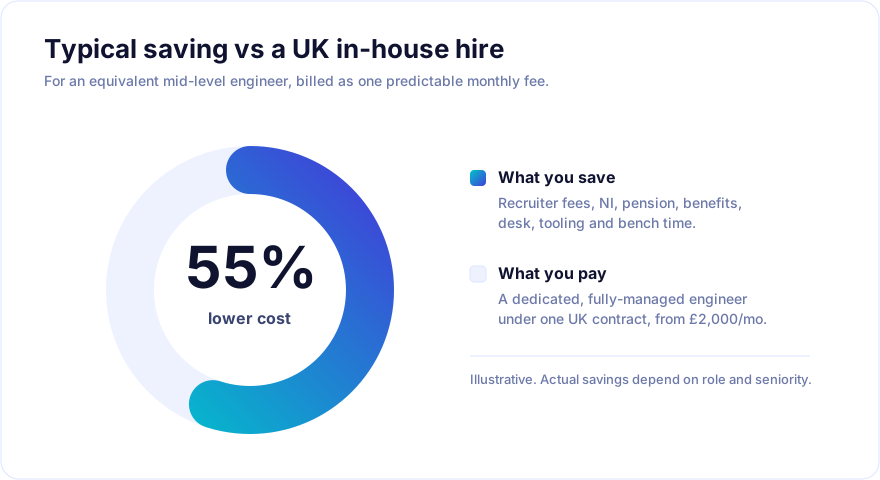
A managed provider spreads recruitment, HR, payroll, compliance and equipment across many engineers, so the per-head overhead is far lower than a single UK employer can achieve. Vetting up front, through OSCABE's five-stage process, also shortens ramp time and reduces the mis-hire rate, which is where a lot of invisible TCO usually hides. Retention sits with the provider, so attrition stops being a line on your budget.
When does an in-house UK hire still win on TCO?
Honesty matters. An in-house UK hire is the right call when the role needs constant in-person collaboration, security clearance tied to UK residency, or physical presence at a customer or lab site. For those roles, budget the full loaded TCO above rather than the salary, because the hidden lines apply just as much.
For the large share of engineering work that is delivered remotely anyway, a managed offshore model gives you the same dedicated capacity at a materially lower TCO, with the overhead and attrition risk absorbed by the provider. Many clients run a hybrid: a lean UK core plus a managed offshore pod for build capacity. You can explore pod and team pricing if you need more than one person, and weigh the structural options in offshore vs nearshore vs managed team.
Frequently asked questions
What is the total cost of ownership of a developer?
Total cost of ownership is the full annual cost of keeping one productive engineer in their seat: base salary plus employer NI, pension, recruitment, equipment, software, office or remote allowance, HR and payroll, bench or ramp time and attrition. For a UK in-house developer it typically runs 1.4 to 1.7 times base salary, so a £60,000 hire can cost around £95,000 to £100,000 all-in.
How much cheaper is a managed offshore developer than an in-house UK one?
On a TCO basis, often 60% or more for an equivalent mid-level role. A UK in-house developer near £98,000 all-in compares with a managed offshore developer from around £30,000 per year through OSCABE, with recruitment, replacement, equipment and compliance already inside the fee rather than added on top.
Are recruitment and attrition really part of TCO?
Yes, and they are usually the most under-counted lines. A 20% recruiter fee amortised over an average tenure adds several thousand pounds per year, and each departure restarts that cost plus a fresh ramp period. Because these recur, they belong in any honest TCO, not just the first-year hiring business case.
Does the OSCABE fee include the hidden costs?
Largely, yes. The monthly fee covers salary, local employer taxes and statutory benefits, recruitment, replacement, equipment, payroll, HR and compliance under one UK contract. You do not add separate NI, pension, agency or equipment lines, which is why the managed figure stays close to its headline.
Build your 2026 plan on real TCO, not salary
If you are sizing headcount for 2026, model the fully-loaded total cost of ownership rather than the advertised salary, then set it beside a managed alternative on the same basis. The gap is usually larger than expected once recruitment, bench time and attrition are in the table.
When you want a concrete figure against your specific roles, talk to OSCABE and we will map your seniority mix to a transparent monthly fee. Browse the vetted engineers we can match within 72 hours, all under one UK contract with compliance built in.