
Scaling ecommerce engineering for peak season, Black Friday, Cyber Monday and the Christmas run, is best handled with managed offshore pods you can ramp up before the rush and resize afterwards, backed by reliable site-reliability and on-call cover during the highest-traffic days. The managed model fits peak especially well because the provider carries recruitment, employment and retention, so you add capacity in weeks rather than months and release it cleanly when trade returns to baseline. OSCABE managed pods start from £7,500 per month under one UK contract, with dedicated professionals from £2,000 per month.
This guide covers when to ramp for peak, how to structure pods for the season, how site-reliability and on-call cover should work across time zones, and how to wind capacity back down without redundancy pain in January.
Why peak season breaks normal ecommerce engineering capacity
Peak season concentrates a year's worth of risk into a few weeks. Traffic multiplies, every checkout second is revenue, and the freeze most teams impose on risky changes means the work shifts from shipping features to hardening, monitoring and rapid response. The capacity you need in November is simply not the capacity you need in February.
Hiring permanent engineers for that spike rarely makes sense, because you would carry the cost all year for a few weeks of need, and the hiring lead time means you would have to commit months ahead with imperfect information. Pulling in random freelancers at the last minute is risky too, because peak is the worst possible time to onboard people who do not know your systems. A managed offshore pod is built for exactly this shape of demand: dedicated, vetted and ramped ahead of time, then resized once the season passes. For how that managed model compares with simply renting individual contractors, see staff augmentation vs managed team vs BOT, and for the wider scaling pattern, see scaling a startup engineering team with offshore pods.
When should you ramp up for BFCM and Christmas?
The single biggest mistake is ramping too late, so the team spends the peak still learning your stack. The fix is to bring capacity on early enough to be genuinely useful before traffic arrives.
A sensible timeline for a UK or EU ecommerce business:
- Roughly 8 to 12 weeks before peak: onboard the pod so it can hold context, ship hardening work, and learn your systems while there is still time. OSCABE typically matches candidates within 72 hours, so the constraint is onboarding, not finding people.
- 4 to 6 weeks before: load and performance testing, capacity planning, and rehearsing incident response, with the pod fully embedded in your rituals.
- Peak window (BFCM through to the Christmas run): change freeze on risky work, heightened monitoring, and on-call cover across the overlap window and beyond.
- Early January: retro, fixes, and a planned wind-down or resize of capacity.
Onboarding ahead of time is what turns extra headcount into extra reliability. A pod that arrives two weeks before Black Friday is a liability; one that has been embedded since early autumn is an asset. For a structured ramp, see how to onboard an offshore development team in 30 days.
How should you structure pods for peak?
Peak pods do different work from feature pods, so structure them around reliability and response rather than roadmap delivery.
The patterns that work:
- A reliability and performance focus. Staff the pod with engineers who can profile, load-test, harden critical paths (checkout, payments, search) and tune infrastructure for the spike.
- On-call and SRE capability. Include people who can own monitoring, alerting and incident response during the highest-traffic days, not just feature work.
- Clear ownership of critical paths. Give the pod accountability for the systems that directly carry revenue, so there is one team responsible for keeping the till ringing.
- Embedded in your rituals. Shared stand-ups, a single incident channel and a clear escalation path inside the overlap window keep the pod inside your process under pressure.
The aim is a pod that strengthens resilience and can respond fast when something goes wrong at the worst possible moment, rather than one that is still shipping features into a frozen codebase. See managed teams and pods.
SRE and on-call cover across time zones
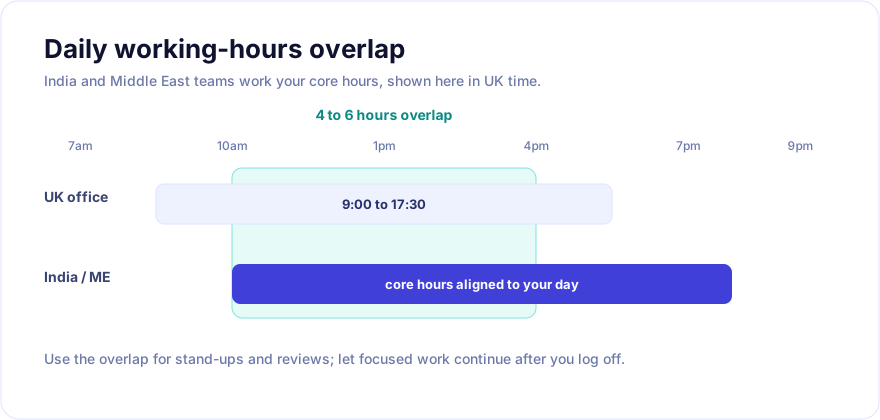
On-call is where the time-zone question becomes an advantage rather than a problem. A distributed team that combines your onshore hours with an offshore pod's overlap and follow-on hours can extend coverage across more of the day than an onshore-only rota.
OSCABE provides 4 to 6 hours of daily overlap with the UK working day, which gives you a live window for collaboration, handovers and joint incident response. Around that, a well-structured rota can hand off cleanly between onshore and offshore, so alerts during the spike are answered promptly rather than waiting for the next morning. The keys to making cross-time-zone on-call work are a clear escalation path, runbooks the whole team can follow, a single incident channel, and explicit handovers so nothing falls through the gap between shifts. For the day-to-day mechanics of distributed working, the managed model keeps the pod inside your rituals and accountable for the critical paths it owns.
Two cautions for peak on-call. First, agree the responsiveness expectations as a clear SLA before the season, so everyone knows what "respond fast" means under pressure. Second, make sure runbooks and access are in place well ahead of time, because the middle of a Black Friday incident is not the moment to discover a missing permission. Front-loading both turns a distributed rota into genuinely extended coverage rather than a coordination risk.
Ramping capacity up and down: the cost picture
The core advantage of managed pods for peak is that capacity tracks the season instead of sitting fixed all year. The table below compares the common approaches. Figures are typical 2026 ranges from public market data and vary by role and region.
| Factor | Permanent hires for peak | Last-minute freelancers | Managed peak pod (OSCABE) |
|---|---|---|---|
| Cost across the year | High (paid all year) | Variable, often premium | Pay for the months you need |
| Ramp-up lead time | Months | Days, but high risk | Weeks, onboarded ahead |
| Knowledge of your stack | Good, but costly to keep | Low, risky at peak | Built up before the spike |
| Reliability under load | Depends on capacity | Inconsistent | Vetted, reliability-focused |
| Wind-down after peak | Redundancy risk | Simple but disruptive | Clean resize, no redundancy |
| Compliance / GDPR | Your responsibility | Often unclear | Handled under one UK contract |
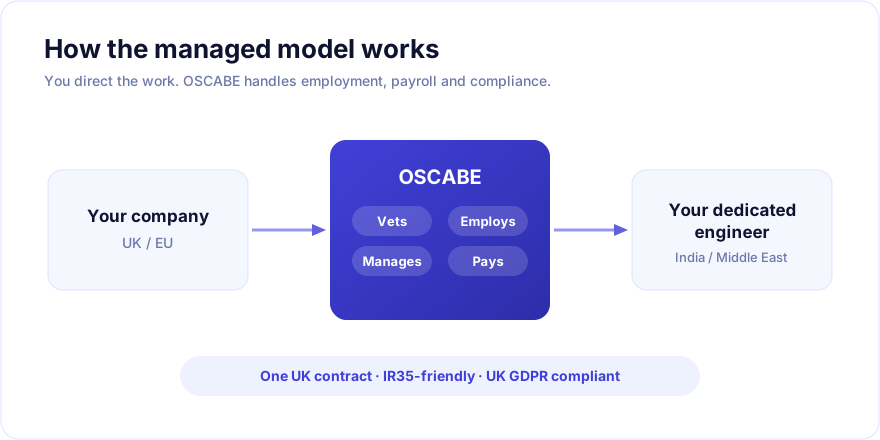
Permanent hiring for a seasonal spike means paying all year for a few weeks of need; last-minute freelancers are risky precisely when reliability matters most; a managed pod lets you add capacity for the season and resize afterwards. A single pod from £7,500 per month also typically gives you several engineers for less than the fully-loaded cost of one or two UK seniors, which keeps peak-readiness affordable. For the underlying economics, see the India vs UK developer salary comparison, and for the model end to end, how it works.
The wind-down matters as much as the ramp-up. Because the provider employs the pod, scaling back in January is a clean resize rather than a redundancy process, so a quiet first quarter does not leave you carrying idle salaries from a busy December. On compliance, the engagement runs under one UK contract with UK and EU GDPR-aligned handling, and OSCABE LTD is verifiable on Companies House.
Frequently asked questions
How far ahead should we scale engineering for peak season?
Aim to onboard a peak pod roughly 8 to 12 weeks before Black Friday so it can hold context, ship hardening work and rehearse incident response before traffic arrives. Finding people is fast, since OSCABE typically matches within 72 hours; the real constraint is onboarding, so the earlier the pod is embedded, the more reliability it adds during the spike.
Can offshore pods handle on-call during peak?
Yes, and they can extend your coverage. Combining onshore hours with an offshore pod's 4 to 6 hours of overlap and follow-on hours covers more of the day than an onshore-only rota. The keys are a clear escalation path, shared runbooks, a single incident channel and explicit handovers, all agreed as an SLA before the season starts.
What happens to the team after peak season?
Because the provider employs the pod, you resize capacity cleanly after peak rather than running a redundancy process. You can scale back to a baseline, keep a couple of dedicated professionals for ongoing work, or pause until the next season, so a quiet January does not leave you paying for December's headcount.
Is a managed pod cheaper than permanent hires for peak?
For seasonal demand, usually yes. Permanent hires are paid all year for a few weeks of need, while a managed pod from £7,500 per month is paid for the months you use it and typically gives you several engineers for less than the loaded cost of one or two UK seniors. You also avoid recruitment, onboarding and redundancy costs.
Get peak-ready without year-round cost
Peak season concentrates risk and revenue into a few weeks, and the capacity you need then is not the capacity you need in February. Managed offshore pods let you ramp up well before BFCM, harden the critical paths, provide reliable on-call cover across time zones, and resize cleanly afterwards, all under one UK contract.
To plan a peak pod for your store, contact OSCABE or browse the engineers we provide. We will map a dedicated, reliability-focused pod to your peak calendar with transparent monthly pricing and a clean wind-down under one UK contract.