
Background Checks and Right to Work for Offshore Developers in India
When you engage developers in India, the UK "right to work" regime does not apply to them, because they are working in India and not seeking the right to work in the UK; what you actually need is robust identity, employment and education verification under Indian conditions, plus the contractual right to insist on it. In most cases the real risk is not immigration status but assurance: confirming the person is who they say they are, has the experience they claim, and has no disqualifying history relevant to the role. A structured vetting process and a fully-managed model are what turn that assurance from a hope into a verified, repeatable fact.
This guide explains how UK right-to-work differs when the work is offshore, the checks that matter for developers in India, the data-protection and consent angle, and how five-stage vetting plus a managed model de-risk the whole thing.
Does UK right to work apply to a developer in India?
This is the first question to get straight, because the answer reframes everything. UK right-to-work checks exist to confirm a person has permission to work in the UK. A developer who lives and works in India, providing services remotely, is not working in the UK and is not relying on any UK immigration permission, so the UK right-to-work checking regime does not bite on them in the way it does for a UK-based hire.
Two cautions, though:
- If a person ever needs to be physically present in the UK (for example a visit, or relocation), UK immigration rules come back into play and must be handled properly.
- The engagement model still matters. Whether you engage through a managed provider that employs the person in India, or contract directly, affects misclassification, tax and compliance risk. We cover the legality of the underlying arrangement in our is it legal to hire developers in India from the UK guide.
So the headline is: for offshore developers in India, swap the UK right-to-work mindset for a verification and due-diligence mindset. The goal is assurance about identity, eligibility to work in India, qualifications and integrity, evidenced properly and lawfully.
What checks actually matter for developers in India?
Background screening in India is well established, but the available checks and the sources differ from the UK, so it helps to know what each one verifies and how it is typically done.
- Identity verification. Confirming the person is who they claim, generally using government-issued identifiers and documents common in India. The aim is a reliable match between the person, their documents and their claimed identity.
- Right to work in India / employment eligibility. Confirming the individual is lawfully able to work in India. For an Indian national this is usually straightforward; for a foreign national working in India it engages Indian immigration and work-authorisation rules.
- Employment history verification. Contacting previous employers to confirm roles, dates and (where appropriate) reason for leaving. This is where claimed seniority is tested against reality.
- Education and qualification verification. Confirming degrees and professional certifications with the issuing institutions or recognised verification routes.
- Reference checks. Structured references that probe how the person actually worked, not just that they existed.
- Criminal record / integrity checks where lawful and relevant to the role, conducted proportionately and with consent.
- Professional and technical assessment. Not a "background" check in the legal sense, but essential assurance that the developer can do the work claimed.
| Check | What it confirms | Notes for India |
|---|---|---|
| Identity | Person matches their documents | Uses India-specific government IDs |
| Work eligibility | Lawful to work in India | Straightforward for Indian nationals |
| Employment history | Real roles, dates, seniority | Contact prior employers directly |
| Education | Genuine degrees/certifications | Verify with institutions or recognised routes |
| References | How they actually worked | Structured, role-relevant questions |
| Integrity/criminal | No disqualifying history | Only where lawful, proportionate, consented |
The combination matters more than any single check. Identity plus employment plus education plus a real technical assessment, taken together, is what gives you defensible confidence in who you are putting on the work.
The data-protection and consent angle
Background screening involves processing personal data, so it sits inside your data-protection obligations, not outside them. Two points to hold onto:
- Lawful basis and consent. Screening should be done on a proper lawful basis, with appropriate, informed consent where required, and limited to what is relevant and proportionate to the role. You should not over-collect.
- Cross-border handling. If screening data flows to the UK or EU, the usual transfer rules and a DPA apply, just as they do for any other personal data. Our GDPR guide for hiring offshore developers covers the mechanics.
Done well, vetting is both more thorough and more disciplined about data: it collects only what the role justifies, on a clear basis, and handles the results securely.
How five-stage vetting de-risks it
The weakness of ad-hoc offshore hiring is that verification is inconsistent: one freelancer is checked thoroughly, another barely at all, and you rarely see the evidence. A structured, multi-stage vetting funnel fixes that by making verification systematic and the same for everyone.
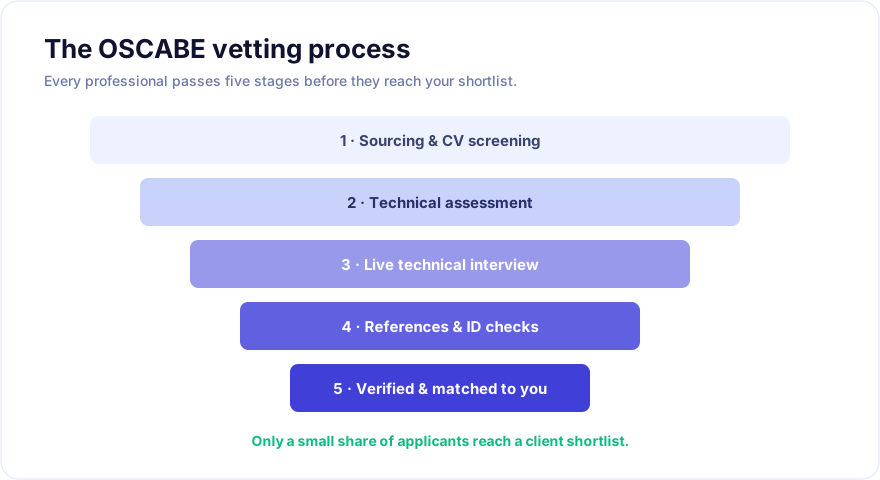
OSCABE's five-stage vetting is designed to test both capability and credibility before anyone reaches you:
- Sourcing and screening against the role requirements.
- Technical assessment of real skills, not just a CV.
- Live interview to probe depth, communication and problem-solving.
- Reference and ID checks to verify identity, history and claims.
- Matching the verified candidate to your specific needs.
Because every professional goes through the same funnel, the assurance is consistent and evidenced rather than ad-hoc. You are not relying on a stranger's self-description; you are getting someone whose identity, history and ability have been checked the same way each time. That screened individual then sits inside the access and device controls that protect your data once they start.
How a managed model carries the burden
Vetting tells you the person is sound at the point of joining. A managed model carries the assurance forward and takes the verification burden off you entirely.
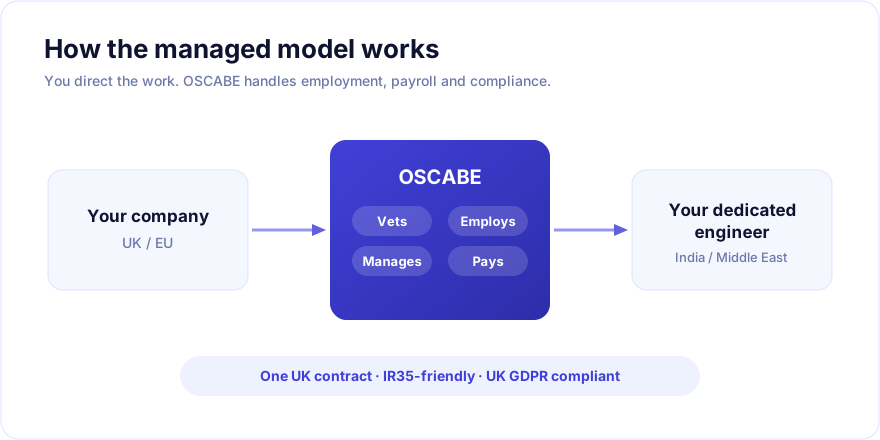
In a fully-managed model the provider employs the developer in India and is the employer of record, so the provider runs the identity, employment-eligibility and background verification under Indian law, holds the evidence, and stands behind the result. Confidentiality, IP and security obligations flow down as employment terms to a person who has already been verified. That also moves the compliance and misclassification risk of the underlying arrangement onto the provider rather than leaving it with you. For the contract terms that bind the verified individual, see our NDA and confidentiality guide and our IP ownership and code assignment guide.
OSCABE delivers dedicated, vetted developers from India under one UK contract, with five-stage vetting, ISO 9001:2015-certified processes and UK and EU GDPR-compliant data handling, and a single accountable counterparty responsible for verification and compliance. You get the assurance without running an Indian background-screening operation yourself. See our managed teams and how it works pages.
A verification checklist for offshore India
- Reframe from UK right-to-work to identity and due-diligence verification.
- Confirm identity against India-appropriate government documents.
- Verify eligibility to work in India.
- Check employment history and seniority with prior employers.
- Verify education and certifications with issuing bodies.
- Take structured, role-relevant references.
- Run proportionate, lawful integrity checks with consent.
- Add a real technical assessment of the claimed skills.
- Keep screening data on a clear lawful basis, with transfer and DPA controls.
Frequently asked questions
Do I need a UK right-to-work check for a developer based in India?
Generally no. UK right-to-work checks confirm permission to work in the UK, and a developer working remotely from India is not working in the UK or relying on UK immigration permission. What you need instead is robust identity, employment-eligibility (in India), education and integrity verification, handled lawfully.
What background checks are realistic for candidates in India?
Identity verification using India-specific government documents, employment-history verification with previous employers, education and certification verification, structured references, and proportionate criminal or integrity checks where lawful and relevant. A real technical assessment should sit alongside these to confirm the claimed capability.
Is background screening in India subject to data-protection rules?
Yes. Screening processes personal data and should be done on a proper lawful basis, with appropriate consent, limited to what is proportionate to the role. If results flow to the UK or EU, the usual transfer rules and a DPA apply, according to current UK, EU and India guidance, which can change over time.
How does vetting plus a managed model reduce my risk?
Five-stage vetting makes verification consistent and evidenced for every candidate, so you are not relying on self-description. A managed model then has the provider employ and verify the person under Indian law, hold the evidence, and carry the compliance and misclassification risk, so you get assurance without running the screening yourself.
General information, not legal advice
This article gives general information about background checks and work-eligibility verification for offshore developers in India as at the date of publication. It is not legal advice and does not create a professional relationship. Screening and employment rules differ by jurisdiction and depend on your specific facts; in most cases you should take advice from a qualified adviser and rely on current UK, EU and India guidance, which can change over time.
Ready to engage verified developers in India without the screening overhead?
OSCABE provides dedicated, fully-managed developers from India under one UK contract, with five-stage vetting, identity and background verification handled under Indian law, and a single accountable counterparty carrying the compliance risk. We do the verification so you get assured, ready-to-work talent. Explore our managed teams, browse our engineers to start matching vetted candidates, or contact us to discuss your requirements.