
The UK tech talent shortage is still acute in 2026, concentrated in senior, DevOps, data and AI-adjacent roles where demand consistently outstrips the available pool. Time-to-hire for these specialisms commonly runs to two or three months, and longer for niche skills, which stalls roadmaps and inflates salaries. A managed remote model is one of the few ways to add vetted senior capacity quickly, with a typical matching window of around 72 hours and a dedicated engineer starting from £2,000 per month.
This article explains what is driving the shortage, which roles are hardest to fill, what realistic time-to-hire looks like, and the practical options for bridging the gap without overpaying or compromising on quality. Figures are expressed as ranges informed by public salary guides and market data such as recruiter surveys.
What is causing the UK tech talent shortage?
The shortage is not one problem but several overlapping ones. The demand side keeps growing as every sector digitises, while the supply side cannot expand fast enough to match it.
The main drivers are:
- Demand outpacing supply at the senior end. Training produces juniors faster than seniors, yet most open roles want three or more years of experience.
- Skills concentration in scarce areas. Cloud, DevOps, data engineering, security and AI tooling have grown faster than the pool of people who can do them well.
- Geographic clustering. Talent concentrates in a handful of cities, leaving employers elsewhere competing for a thin local pool.
- Retention pressure. Strong engineers field frequent approaches, so counter-offers and churn push salaries up and lengthen vacancies.
- Visa and relocation friction. Bringing talent in from abroad is possible but slow and costly, so it rarely solves an urgent gap.
The combined effect is a market where the roles you most need are the ones that take longest and cost most to fill.
There is a structural dimension too. The pace of change in tooling means a skill that was scarce two years ago can become commonplace while a brand-new one opens up a fresh gap. Cloud-native infrastructure, data platform work and the practical engineering around AI systems are the current frontier, and the people who can do them well are still being trained faster than they are being produced. This churn is why throwing money at the problem only partly works: a higher salary wins you a candidate from a competitor, but it does not enlarge the underlying pool, so the market simply re-prices and the shortage persists.
Which roles are hardest to fill in 2026?
Not all vacancies are equal. Application-development roles at junior and mid level can usually be filled in weeks, while senior and specialist roles can stay open for months. The table below summarises the relative difficulty and typical time-to-hire by role, based on market data such as recruiter surveys.
| Role | Relative scarcity | Typical time-to-hire | Salary pressure |
|---|---|---|---|
| DevOps / platform engineer | Very high | 8 - 14 weeks | High |
| Data engineer / ML engineer | Very high | 8 - 16 weeks | High |
| Senior backend engineer | High | 6 - 12 weeks | Moderate to high |
| Security engineer | High | 8 - 14 weeks | High |
| Mid-level full-stack | Moderate | 4 - 8 weeks | Moderate |
| Junior / graduate | Lower | 3 - 6 weeks | Lower |
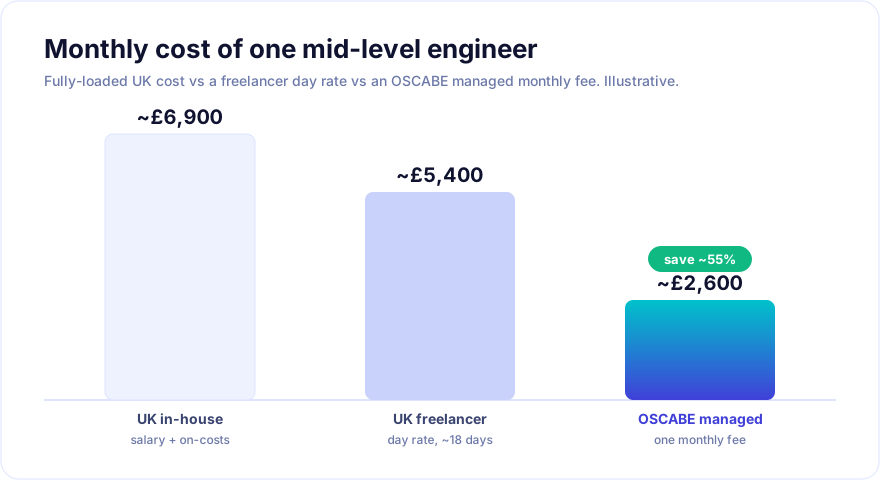
The pattern is consistent: the roles that move roadmaps forward, senior and platform-level, are exactly the ones in shortest supply. That is why a single unfilled senior vacancy can hold up an entire team.
Why time-to-hire matters more than you think
A vacancy is not free while it is open. Every week a senior role stays unfilled, you carry the cost of slipped delivery, overloaded colleagues picking up the slack, and the management time spent interviewing. For a role that would cost £90,000 fully loaded, three months unfilled is not just three months of saved salary; it is three months of lost output that often exceeds the salary itself.
There is also the cost of getting the hire wrong under pressure. When a team is desperate, the bar drops, and a rushed senior hire who leaves at six months means paying the agency fee again and absorbing another ramp-up. Industry estimates commonly put the cost of a failed mid-level hire at well over £30,000 once lost productivity is included. Speed and quality therefore have to be solved together, not traded off.
How to bridge the skills gap
There are four broad routes to closing the gap, and most mature teams use a blend rather than relying on one.
| Approach | Speed | Quality control | Cost | Best for |
|---|---|---|---|---|
| In-house UK hire | Slow | High | Highest | Roles needing local presence |
| UK day-rate contractor | Moderate | Variable | High, plus IR35 risk | Short-term surges |
| Freelance marketplace | Fast | Variable | Low headline, high admin | Well-scoped, low-risk tasks |
| Managed remote team | Fast | High and vetted | Predictable, lower | Ongoing senior capacity |
A managed remote model addresses the two pain points the shortage creates, speed and senior scarcity, at the same time. OSCABE recruits in India and the Middle East, runs a five-stage vetting process, and typically matches a dedicated engineer within around 72 hours. The engineer is employed, managed and paid by OSCABE under one UK contract, with a 4 to 6 hour overlap with UK and EU working hours.
For a fuller picture of how offshore capacity is sourced and run, see our guide to hiring remote developers from India, and for the economics, the total cost of ownership: offshore vs in-house.
Where a managed model fits, and where it does not
A managed remote hire is well suited to ongoing engineering capacity: backend, full-stack, DevOps, data and QA work that is delivered remotely anyway. It gives you a dedicated, vetted professional far faster than the local market, with compliance handled.
It is less suited to roles that genuinely require UK physical presence, security clearance tied to UK residency, or constant in-person collaboration. For those, budget the full loaded cost and hire locally. Many teams run a hybrid: a small UK core for the roles that need it, plus a managed remote pod for build capacity. You can see how the managed model works on our how it works page or explore pod and team options.
The strongest reason a managed model works against the shortage is that it changes which pool you are fishing in. Instead of competing with every other UK employer for the same thin slice of senior DevOps or data talent, you draw on large, well-trained engineering populations in India and the Middle East that the local UK search never touches. That is why the matching window is measured in days rather than months, and why the cost is predictable rather than bid up by a national shortage. It does not require you to abandon UK hiring; it simply removes the single point of failure of relying on one over-subscribed market for your most critical roles.
Frequently asked questions
Why is there a tech talent shortage in the UK in 2026?
The shortage is driven by demand growing faster than supply, especially at senior level, and by skills concentrating in scarce areas such as DevOps, data, security and AI tooling. Geographic clustering and retention pressure make it worse. The result is that the most needed roles take the longest and cost the most to fill.
Which tech roles are hardest to hire in the UK?
DevOps and platform engineers, data and machine-learning engineers, senior backend engineers and security engineers are consistently the hardest, with time-to-hire often running 8 to 16 weeks. Junior and mid-level application roles are easier, typically filled in 3 to 8 weeks.
How long does it take to hire a developer in the UK?
It depends heavily on the role. Junior and mid-level roles often fill in 3 to 8 weeks, while senior and specialist roles can take 8 to 16 weeks or longer. A managed remote model can shorten this dramatically, with OSCABE typically matching a vetted engineer within around 72 hours.
Can offshore hiring really solve the skills gap?
For most remotely-delivered engineering work, yes. A managed remote model adds vetted senior capacity quickly and predictably, without visa friction or relocation delay. It does not replace UK hires for roles needing local presence, but for ongoing build capacity it directly addresses both speed and scarcity. Compare the options in our DevOps and cloud engineer cost guide.
Close your skills gap without overpaying
If the shortage is holding your roadmap back, the fastest route to vetted senior capacity is usually not another six-week search. Map your hardest-to-fill roles against a managed remote alternative and compare on speed, quality and loaded cost. When you are ready, talk to OSCABE for a transparent monthly quote under one UK contract, or browse vetted profiles on our engineers page to see what is available now.