
When you budget offshore hiring in 2026, the smartest move is to fix the cost in your own reporting currency - GBP for UK buyers, EUR for EU buyers - and avoid paying engineers directly in a third currency such as INR or AED. Paying across multiple currencies exposes your budget to foreign-exchange swings, conversion fees and reconciliation overhead that can quietly erode a 50% saving. A managed model bills you a single transparent monthly fee in GBP or EUR under one UK contract, so the rate you agree is the rate you pay. OSCABE managed remote professionals start from £2,000 per month.
This guide explains the currency risk in offshore hiring, how it differs for GBP and EUR buyers, and why consolidating to one UK contract removes most of the FX and billing complexity that direct-hire and multi-vendor setups create.
Why currency matters more than the headline rate
Offshore hiring is usually pitched as a single low number, but if you pay an engineer or a local entity in their own currency, that number moves every month. The exchange rate between GBP or EUR and currencies like the Indian rupee or UAE dirham is not fixed, so a rate that looked attractive when you signed can drift by the time you reconcile the quarter.
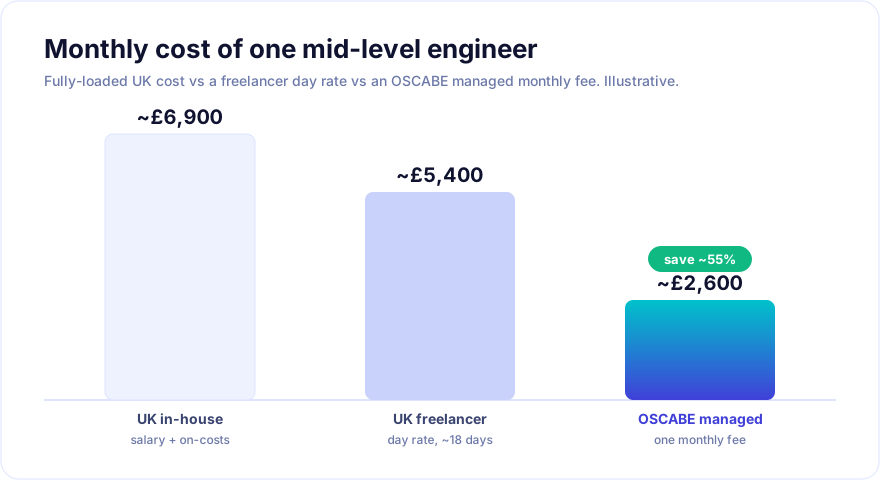
Three costs hide behind the headline:
- FX rate movement. The spot rate between your currency and the payment currency fluctuates daily. Over a year, public market data shows currency pairs can move by several percentage points in either direction, which changes your effective cost without any change to the engineer's pay.
- Conversion spread and fees. Banks and payment providers add a margin to the mid-market rate, plus per-transfer fees. Across monthly payroll for several people, that spread compounds.
- Reconciliation overhead. Finance teams must re-translate foreign invoices, track gains and losses, and reconcile against budget in the reporting currency. That is real time and a source of error.
None of this means offshore is a bad idea. It means the structure of how you pay matters as much as the rate you agree.
GBP vs EUR: the same risk, two reporting currencies
The mechanics are identical for UK and EU buyers; only the home currency changes. The table below shows how the same offshore engagement looks depending on how it is structured and which currency you report in.
| Budgeting approach | UK buyer (GBP) | EU buyer (EUR) | Currency risk |
|---|---|---|---|
| Pay engineer in local currency (INR/AED) | Convert GBP each month | Convert EUR each month | High: rate moves monthly |
| Pay a local entity per country | Multiple FX lines | Multiple FX lines | High: several pairs to manage |
| Single managed fee in your currency | Fixed in GBP | Fixed in EUR | Low: rate locked in contract |
For a UK buyer, the cleanest setup is a fee quoted and invoiced in GBP. For an EU buyer, the same engagement can be quoted and invoiced in EUR. In both cases the provider carries the underlying currency exposure, not you, so your budget line is stable in the currency your board actually reports in. For raw rates by region before any currency layer, see offshore software development rates by country and the offshore developer rate tables for India, MENA and Eastern Europe.
How FX risk erodes an offshore saving
A worked example makes the point. Suppose you agree the equivalent of £2,000 per month for a managed developer, but you pay an overseas entity in its local currency. If that currency strengthens against GBP by 6% over the year, your effective cost rises toward £2,120 per month without anyone renegotiating, and the gain or loss lands unpredictably across the year.
Now multiply by a pod of five people and add conversion spreads of one to two percent per transfer. The headline saving is still there, but a slice of it is now noise: FX movement plus fees plus the finance time to reconcile it. For a budget that was meant to be predictable, that is the opposite of helpful.
The fix is structural. When the fee is denominated in your reporting currency and fixed in the contract, the provider absorbs the FX movement between your currency and the local payroll currency. Your monthly cost stops moving, and your finance team books one clean invoice instead of several foreign-currency lines. This is part of the wider hidden-cost story covered in the total cost of ownership of offshore vs in-house.
Why one UK contract simplifies billing
Beyond FX, the contract structure itself drives a lot of complexity. Direct hiring or multi-vendor offshore often means several agreements, several invoices, several currencies and several compliance regimes. A single UK contract collapses that into one.
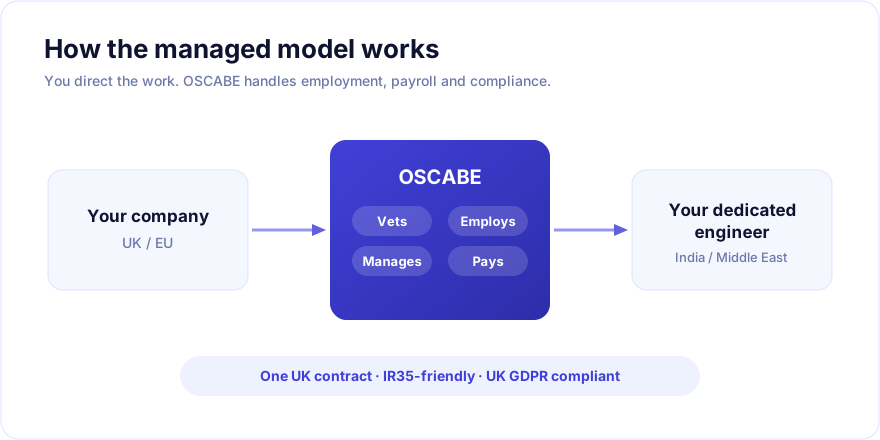
With OSCABE, one UK contract with OSCABE LTD covers the whole engagement, whether the professionals sit in India or the UAE and wider Middle East:
- One invoice, one currency. Billed in GBP or EUR, so there is a single line to reconcile and no per-country FX.
- One counterparty. OSCABE LTD, verifiable on Companies House, is your contracting party, not a chain of overseas entities.
- VAT handled cleanly. EU buyers can apply the reverse-charge mechanism on a single UK invoice; see EU VAT reverse charge on offshore services.
- Compliance under one roof. UK GDPR alignment and employer obligations sit with the provider, not split across jurisdictions.
The practical effect is that procurement, finance and legal each deal with one document and one currency, which is far cheaper to run than a patchwork of direct contracts.
Budgeting tips for 2026
A few habits keep an offshore budget stable regardless of where the talent sits:
- Denominate in your reporting currency. Agree the fee in GBP or EUR so the board sees a stable number, and let the provider carry the local-currency exposure.
- Budget the all-in fee, not the local wage. Compare the managed fee against your fully-loaded in-house cost, not against a raw overseas salary, so the comparison is like for like.
- Avoid multi-currency payroll. Every additional payment currency adds spread, fees and reconciliation. One currency in, one currency out is the cheapest to operate.
- Lock the rate in the contract. A fixed monthly fee removes renegotiation risk and makes forecasting straightforward.
For UK and EU buyers comparing structural options, offshore vs nearshore vs managed team sets out where a managed model fits, and how it works explains the single-contract delivery in detail.
Frequently asked questions
Should I budget offshore hiring in GBP or EUR?
Budget in whichever currency you report in: GBP for UK companies, EUR for EU companies. The key is to fix the fee in that currency rather than paying engineers in a third currency such as INR or AED. With OSCABE, the managed fee is quoted and invoiced in GBP or EUR, so your budget line stays stable regardless of FX movement.
How does a single UK contract reduce currency risk?
A single UK contract denominates the fee in your currency and makes the provider the counterparty, so they absorb the exchange-rate movement between your currency and the local payroll currency. You receive one invoice in one currency instead of several foreign-currency payments, which removes both the FX swing and the conversion fees from your budget.
Can EU buyers be billed in EUR even though OSCABE is UK-registered?
Yes. OSCABE LTD is UK-registered but can invoice EU clients in EUR, with the VAT reverse-charge mechanism applied on a single invoice where relevant. That keeps EU budgeting clean in EUR while still benefiting from one UK contract and one accountable provider. See EU VAT reverse charge on offshore services for the mechanics.
How much can FX movement affect my offshore costs?
It varies, but public market data shows major currency pairs can move by several percentage points over a year. On a multi-person pod paid in a local currency, that movement plus conversion spreads can erode a meaningful slice of the saving. Fixing the fee in your reporting currency removes that variability entirely.
Make your offshore budget predictable
The fastest way to keep an offshore budget stable in 2026 is to fix the fee in your reporting currency and consolidate to one UK contract, so FX movement, conversion fees and multi-invoice reconciliation stop eating into the saving. The rate you agree becomes the rate you pay.
When you want a transparent monthly figure in GBP or EUR for your roles, talk to OSCABE. Browse the vetted professionals we can match within 72 hours, all billed under one UK contract in the currency you report in.