
Posted Workers Directive and Offshore Teams: Does It Apply?
The EU Posted Workers Directive is generally aimed at situations where a worker is sent by their employer to physically perform work in another EU member state for a limited period. A genuinely remote offshore team, employed and based in India or the Middle East and working from there, is a different situation: the workers are not being posted into an EU country, so the Directive's posting machinery typically does not apply in the way it does to an on-site secondment. As always, the analysis depends on the facts, particularly whether anyone actually crosses a border to work on the ground.
This guide explains what the Posted Workers Directive covers, why a remote managed team differs from posting workers on-site, and how a single UK contract keeps the engagement clean. It complements our pieces on the Agency Workers Regulations and offshore managed teams and EU VAT reverse charge for offshore services.
What is the Posted Workers Directive?
The Posted Workers Directive is an EU framework that protects workers who are temporarily sent by their employer to provide services in another EU member state. The core idea is that a posted worker should benefit from certain core employment terms of the host country (the place they are sent to work) for the duration of the posting, so cross-border service provision does not undercut local standards.
Typical posting scenarios include:
- A company in one member state sending its employees to carry out a contract on a client's premises in another member state.
- An intra-group transfer of staff to an establishment in another member state.
- A temporary work agency hiring out a worker to a user undertaking located in another member state.
The common thread is physical performance of work in a host member state by a worker who normally works elsewhere, for a temporary period. The Directive is about people crossing a border to work on the ground, not about where a service ultimately originates.
Why a remote managed team is a different situation
A managed remote team is structured around work performed remotely, in the team's home country, not on the client's premises in an EU state. That distinction matters for the posting analysis.
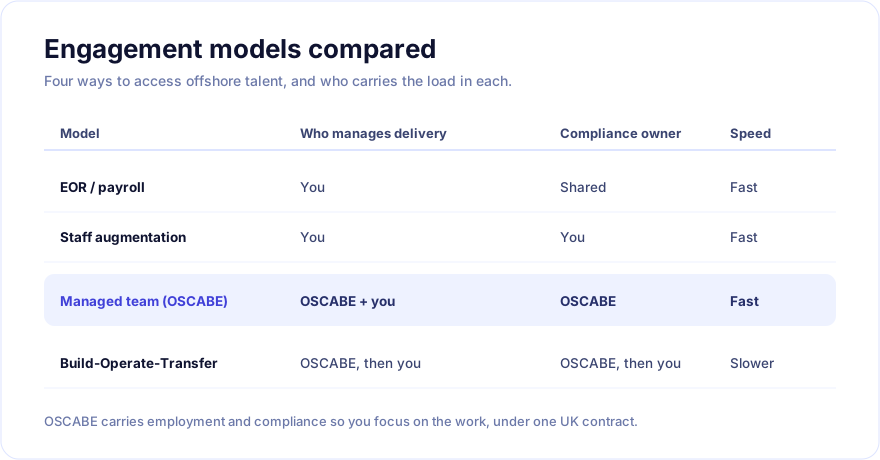
The key differences are:
- No one is posted on-site. The team works from India or the Middle East. There is no temporary deployment of a worker into an EU member state to perform the work there, which is the trigger the Directive is built around.
- You buy a service, not on-premises labour. Under a managed model, you contract for delivered outcomes and dedicated capacity, not for workers to attend and work at your location.
- The employer is in-country, abroad. The professionals are employed by the provider's entity in their home country, which runs their employment and social security there.
Because the worker is not sent into a host member state to perform the work, the posting rules generally do not bite in the same way. If, by contrast, you brought offshore staff into an EU country to work on-site for a period, you would need to look carefully at posting and local employment obligations. The deciding factor is where the work is physically done, so any plan to have offshore staff work on the ground in the EU should be reviewed with local counsel.
On-site posting vs remote managed team, compared
The contrast is easier to see side by side.
| Factor | Worker posted on-site in an EU state | Remote managed team abroad |
|---|---|---|
| Where the work is performed | In the host EU member state, on-site | In India or the Middle East, remotely |
| Is a worker sent across a border to work? | Yes, temporarily | No |
| Posted Workers Directive relevance | Generally engaged | Generally not engaged on the same basis |
| Host-country core employment terms | Apply for the posting period | Not triggered by remote offshore work |
| Who employs the worker | The sending employer, posting into the host state | The provider's entity in the worker's home country |
| Typical contracting structure | Service contract plus posting compliance | One UK B2B service contract |
This is a general comparison; the precise position turns on the facts of a given arrangement, and EU rules can change, so treat the table as a starting point rather than a conclusion.
The one-UK-contract positioning
The cleanest way to access offshore capacity for a UK or EU business is through a single contract with a provider that employs the team abroad, rather than a web of arrangements that invite cross-border posting and local-employment questions.
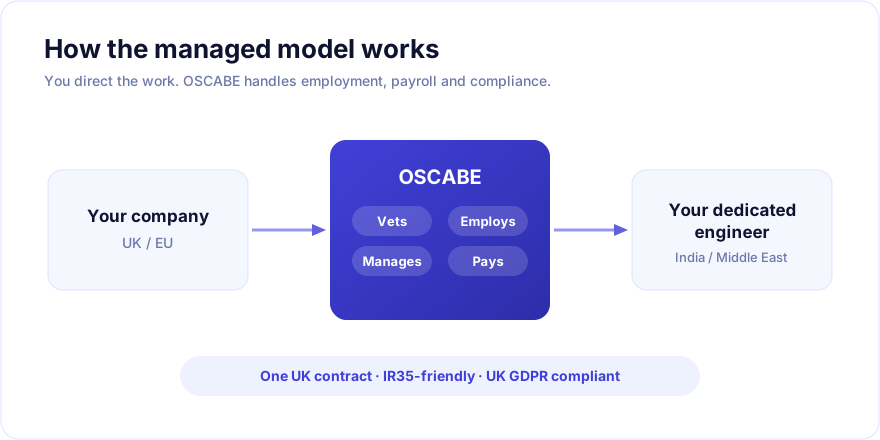
Under this structure:
- One UK B2B agreement governs the relationship. You direct the work and receive the service; you do not become the employer abroad and you are not posting anyone into an EU state.
- The provider employs the team in their home country, handling local employment, payroll and social security there, which keeps the employment relationship firmly outside the EU posting framework.
- EU clients are served the same way. A managed remote team delivers to EU clients without the client posting workers or taking on local employment obligations for the team.
OSCABE operates exactly this model. UK and EU clients contract under one UK agreement; the professionals are employed by OSCABE's entities in India or the Middle East and work from there as a dedicated, fully-managed extension of your team. Because OSCABE is the employer of record for its people, the employment and compliance risk sits with OSCABE, not the client. See how it works, our managed teams, and our EU page for the EU client angle.
For related cross-border questions, see the Agency Workers Regulations and offshore managed teams for the UK agency-worker angle, EU VAT reverse charge for offshore services for the tax treatment, and GDPR and hiring offshore developers for data transfers.
Frequently asked questions
Does the Posted Workers Directive apply if my offshore team never enters the EU?
Generally not on the same basis. The Directive is built around workers being sent to physically perform work in a host EU member state for a temporary period. A team that is employed abroad and works remotely from there is not being posted into an EU state, so the posting machinery typically does not apply. The position can change if offshore staff actually travel to and work on the ground in an EU country.
What happens if I bring an offshore worker on-site in the EU for a short visit?
That changes the analysis and should be reviewed. Short visits may be manageable, but performing work on-site in an EU member state can engage posting rules and local employment obligations. Where any on-the-ground EU working is planned, take advice from local counsel before proceeding, because the deciding factor is where the work is physically done.
How is a managed remote team different from a temporary work agency posting?
A temporary work agency posting hires out a worker to a user undertaking in another member state, with the worker performing work there. A managed remote team is a B2B service delivered remotely from the team's home country, where the provider employs the team. You contract for the service, not for workers to attend your premises, so the posting framework is generally not engaged in the same way.
Does one UK contract cover EU clients too?
Under the OSCABE model, UK and EU clients contract under one UK agreement, and the team is employed abroad by OSCABE's entities. This keeps the arrangement as a managed service rather than a posting or local-employment arrangement. EU-specific points such as VAT and data transfers are handled within that framework; see our EU page.
General information, not legal advice
This article provides general information about the EU Posted Workers Directive and cross-border managed teams, current as at the date of publication. It is not legal advice and does not create a professional relationship. Cross-border arrangements depend on specific facts and EU rules can change; please take advice from qualified UK, EU and local advisers before acting. Where useful, consult current EU and member-state guidance and the relevant authorities directly.
Ready to access offshore capacity under one clean contract?
OSCABE provides dedicated, fully-managed remote teams from India and the Middle East to UK and EU companies under one UK contract, with the team employed and managed in-country. You direct the work; we carry the employment and compliance. Explore our engineers and managed teams, or contact us to design the right cross-border structure.